Motorhome Travel on the Norwegian Coast: What to Expect
Motorhome & Road Trips · 11 min read
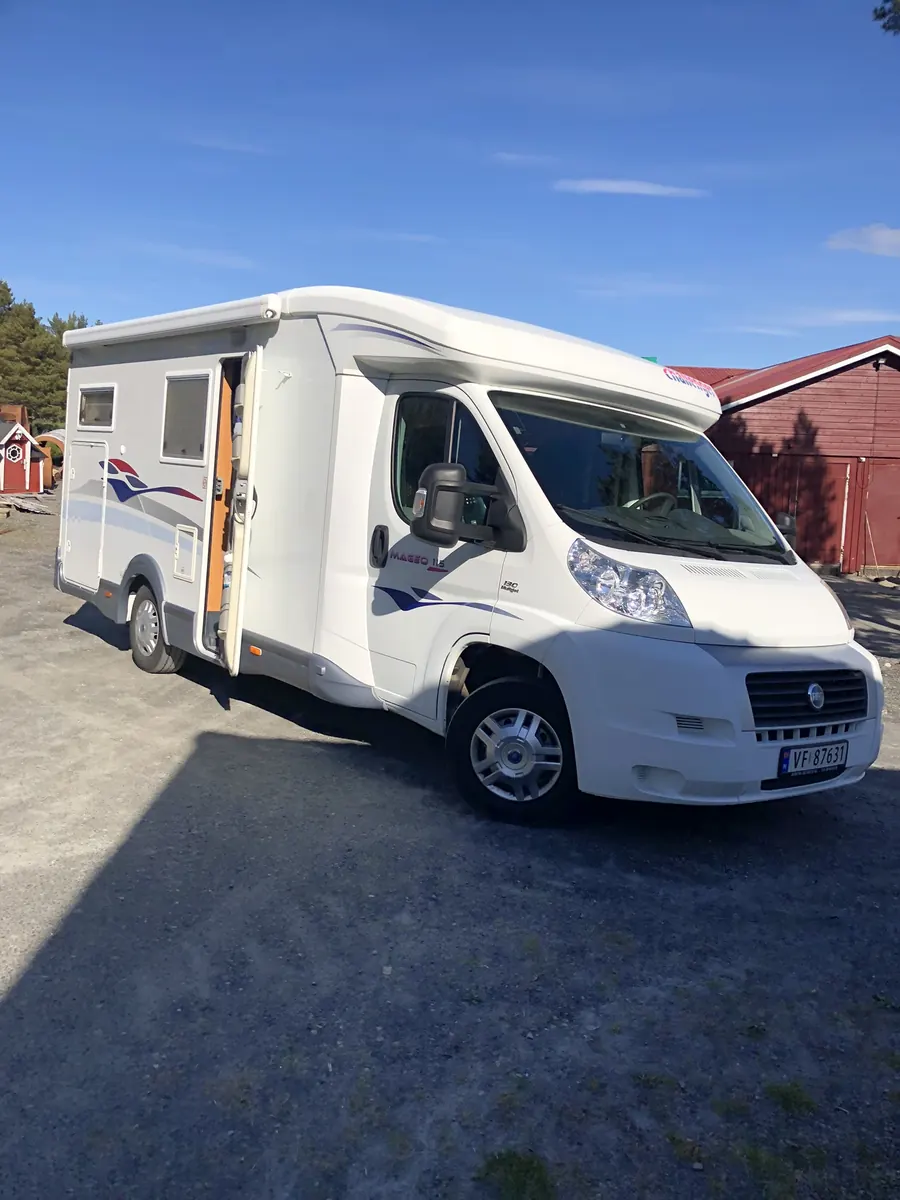
The Norwegian coast is one of the most rewarding places I know to travel by motorhome. Fjords cut inland between mountains, islands are connected by bridges and tunnels, and small fishing villages sit at the water’s edge in settings that feel a long way from a city.
It is also a place that asks you to slow down. Coastal roads are often narrow and winding, ferries are part of many journeys, and the weather can change a planned day in a matter of hours. A coastal road trip works best when the journey itself is the experience, rather than something to get through on the way to a destination.
This guide is about motorhome travel along the Norwegian coast in general — what to expect, how to plan, and where the common surprises tend to come from. It is not a route description. The coast is varied, and the more honestly you plan for that, the better the trip tends to be.
Why the Norwegian coast works so well for road trips
The Norwegian coast combines a remarkable mix in a relatively short distance: fjords, islands, fishing villages, ferries, bridges, tunnels and mountain scenery, often all visible from the same stretch of road. You can drive along open water in the morning and be deep in a fjord valley by the afternoon, without ever leaving the coast.
What makes it work for road trips is that the journey itself is usually as important as the destination. A day’s drive along the coast is rarely just a transfer between two points — it is a sequence of ferries, viewpoints, small communities and changing landscapes, and the trip is better when you treat it that way instead of trying to rush through it.
Not every coastal road is scenic, and some stretches are ordinary, busy or less suited to large vehicles. But the parts that do deliver are genuinely memorable, and they are easier to reach by motorhome than by almost any other way of traveling.
Expect ferries to be part of the journey
Many coastal routes in Norway include vehicle ferries. Where the road meets the sea, a ferry crossing is often the normal way to continue, and on some parts of the coast a trip without a ferry would be hard to plan at all.
Ferry schedules, prices, payment methods and booking arrangements vary by route and operator. Many shorter road ferries work on a first-come, first-served basis, while some longer, seasonal or popular crossings may allow, recommend or require reservations. The way you pay can differ too — not every ferry uses the same payment system, and the discounts or agreements that apply to road tolls do not automatically transfer to every ferry.
The practical approach is to check the specific ferry operator for each route you plan to use before you travel. Confirm the timetable, whether booking is recommended or required, how payment works, and any rules for larger vehicles. Conditions vary by route and operator, so rely on the official operator for the crossing and travel date you have in mind.
Coastal roads can be narrow
Some coastal roads are narrow, winding and slower than visitors expect. A distance that looks short on the map can take considerably longer in reality, especially where the road follows the shoreline or climbs over headlands between villages.
You will meet passing places on single-lane sections, along with tunnels, bridges and stretches where two large vehicles need to cooperate carefully to get past each other. Passing places are a working part of the road — they exist so vehicles can pass safely, not so they can park. A passing place is not a parking space, and using one for parking, resting, a picnic or an overnight stay can create a real problem for other drivers.
My suggestion is to allow more time than a navigation app may suggest. Navigation estimates may not fully reflect ferry waits, narrow-road driving, changing conditions or the slower pace of some coastal routes. Building in extra time means you are not pressured to rush on roads that ask for patience.
Wind and weather matter
Exposed coastal roads, bridges and ferry crossings can be affected by strong wind, rain, fog and rapidly changing weather. A calm morning can turn into a gusty afternoon, and a clear stretch can disappear into fog within a few kilometers. Coastal weather is genuinely changeable, and it affects driving more than many visitors expect.
Before you drive a coastal section, check the current weather and road conditions for your route. Strong wind in particular can make driving a high-sided motorhome uncomfortable or, on exposed bridges, genuinely difficult, and ferry crossings can be delayed or canceled when conditions are poor.
Wind, rain and fog can affect high-sided motorhomes, exposed roads, bridges and ferry services, so treat weather as a real factor in your daily planning, not as background information. For current conditions, check the Norwegian Public Roads Administration, Yr and the ferry operator for your route. If a day looks rough, it is usually better to wait or take a more sheltered route than to push through.
Do not plan too much distance in one day
Coastal travel often takes longer than the distance suggests, because the day is shaped by things other than driving speed. Ferries add waiting and crossing time. Narrow roads reduce your average pace. Scenic stops pull you out of the vehicle. Tunnels, weather and traffic in popular areas all add minutes that add up.
The result is that a day which looks manageable on paper can become a long, tiring day in reality. I encourage travelers to plan fewer kilometers and leave room for delays and spontaneous stops — the viewpoint you did not know about, the village that turned out to be worth a walk, the ferry that was running a little behind.
There is no universal number of kilometers that works for every traveler, vehicle and route, because ferry waits, narrow roads, weather and the stops you want to make all shape the day. The principle is simpler: plan less than you think you can manage, and treat anything extra as a bonus rather than the goal.
Where to stop overnight
A common misunderstanding is that Norway’s right to roam gives motorhomes a general right to park anywhere. It does not. The right to roam is built around non-motorized outdoor recreation, and it is not a general motorhome parking permit. Motor vehicles remain subject to traffic rules, parking rules, property rights, signs and local restrictions. Where Can You Park a Motorhome Overnight in Norway? covers this in detail, so I will keep this section short.
The practical options include campsites, designated motorhome pitches and legal parking locations where parking and overnight stays are permitted and no sign or local rule prohibits them. A legal parking space does not automatically allow you to set up camping equipment such as awnings, chairs, tables or grills — whether that is acceptable depends on the location and the rules that apply there. Follow local signs and restrictions: if a sign says no overnight stays, that is the answer even if the spot looks ideal.
On the coast specifically, the same principles apply as elsewhere: use designated areas where they exist, respect private property and local access, and never use passing places, viewpoints or roadside verges as campsites. Passing places must never be used for parking, resting, picnics or overnight stays. Local signs and municipal restrictions take priority, so check what applies where you intend to stop. When a place is full, move on to another legal stop rather than improvising.
Fuel, food and supplies
Services can be farther apart in rural coastal areas than travelers expect. A stretch of coast that looks well-populated on the map may have only a few small settlements, and fuel stations, grocery stores and other supplies may not be open late or available in every village.
A sensible habit is to keep fuel at a comfortable level rather than running it down, and to buy groceries before entering more remote stretches rather than assuming the next village will have a store. This is not about alarm — most coastal areas are perfectly manageable — it is about avoiding the unnecessary stress of searching for a closed station at the end of a long day.
Fuel stations and stores do exist along most of the coast, but their opening hours and locations change over time, so the reliable approach is to top up when you can and to stock food and water for the stretches where you are less sure of what is ahead.
Fresh water and wastewater
Use proper facilities for drinking water, toilets and wastewater disposal. Campsites and designated motorhome service areas are set up for exactly this, and they are the right place to fill fresh water and empty toilet waste and gray water.
Fill your tanks only from a water point clearly marked as drinking water or potable water. Not every tap at a campsite, marina or motorhome service area is automatically potable, so do not assume that an outdoor tap is safe to drink from. If a water point is not clearly labeled, ask the operator or use another verified source.
Empty toilet waste and gray water only at facilities intended for motorhome disposal, such as designated service stations, campsites and motorhome areas. Never use roadside drains, nature, ordinary drains or toilets that are not specifically approved for motorhome waste — improper disposal can cause pollution and problems for local drainage systems.
Planning your water and waste stops alongside your fuel and grocery stops keeps the day simpler. When you find a proper facility, use it — the next one may be farther than you expect.
Bridges, tunnels and vehicle size
Know the actual height, width, total length and weight of your motorhome before you travel the coast, including any fitted equipment. Bridges, tunnels and some road restrictions are sized for specific vehicle dimensions, and a motorhome that exceeds a posted limit can create a real problem on a road with few alternatives.
Fitted equipment changes your effective dimensions. Rear-mounted bike racks and bicycles normally increase the vehicle’s total length; roof boxes, antennas, air-conditioning units and other roof-mounted equipment may increase its height; mirrors affect practical width; and trailers increase the total combination length. Know your vehicle’s actual height, width, length and weight, including this equipment, before you set off.
Follow posted restrictions. If a sign indicates a height, weight or width limit, treat it as a real one rather than a suggestion. Official road signs and posted restrictions take priority over navigation apps, which may suggest routes that are technically open but unsuitable for your vehicle. The actual limits vary by structure and route, and the signs at each location are the authoritative source.
Popular coastal routes can be busy
Famous coastal destinations and viewpoints can be much busier in summer than the quiet images suggest. A place that feels peaceful in the off-season can have a steady flow of vehicles, motorhomes and tourists through the peak weeks, and popular stops can fill up during busy periods.
Arrive with flexibility. If a viewpoint or parking area is full, be prepared to continue to another legal stopping place rather than squeezing into a gap that is not really there. Forcing a stop into an already crowded area makes the crowding worse and increases the chance of blocking someone in.
The entire Norwegian coast is not uncrowded. Some stretches are quiet even in summer, and others are genuinely busy. Planning around the possibility of crowds — and being willing to move on — is part of traveling the coast well.
Small communities are homes, not just destinations
Many of the coastal villages that motorhome travelers want to visit are working communities. They are places where people live, fish, farm and run businesses, not just scenic stops on a route. A postcard-pretty harbor is still someone’s workplace, and a quiet road through a village is still the road residents use every day.
Do not block homes, docks, farm roads, businesses or local access, even for a short stop. A vehicle that is “just there for a minute” can still prevent someone from getting a boat in or out, reaching their property, or opening their business. Before you settle into a stop, look at it from a resident’s point of view.
One of the simplest ways to be welcome is to be a customer. Buying groceries, fuel or a meal locally, or using a local campsite, puts something back into the communities that host a lot of visitors through the summer. This is not an obligation and there is no need to feel guilty about self-catering — it is just a natural part of traveling through places that receive a lot of people. A village that sees visitors stop, shop and move on is in a much better position to keep welcoming them.
Should you follow one famous route or explore one region slowly?
You do not need to cover the entire Norwegian coast in one trip. In fact, trying to do so is one of the most common ways a coastal road trip becomes stressful rather than enjoyable. The coast is long, the roads are slow, and the ferries and weather do not care about your schedule.
A better approach for most travelers is to choose one or two regions and allow real time for ferries, weather and slower roads. Exploring a smaller part of the coast properly tends to be more rewarding than glimpsing a large part of it through the windshield. You see more, you stop more, and you are not spending the whole trip worrying about the next ferry.
The right choice depends on what you want from the trip, how much time you have, and how comfortable you are with narrow roads and ferries. Any coastal region can be excellent when you give it enough time, and any of them can be frustrating when you rush it.
A simple coastal motorhome checklist
A short list to run through before and during a coastal road trip:
- Check the weather before driving, especially on exposed sections.
- Check current road conditions for your route.
- Check ferry schedules and booking arrangements for each crossing.
- Know your motorhome’s height, width, total length and weight.
- Keep enough fuel for the next stretch, and top up when you can.
- Plan overnight stops before it gets late.
- Carry food and water for remote stretches.
- Allow extra travel time — more than the navigation app suggests.
- Follow local parking restrictions and signs.
- Never block passing places or local access.
None of this takes long, and it is the difference between a coastal trip that feels smooth and one that feels like a series of small surprises.
What I Would Do When Planning a Coastal Road Trip
If I were planning a coastal motorhome trip, I would not try to cover the whole Norwegian coast. I would choose a smaller part of it — one region, or two at most — and plan only a few important stops rather than a fixed daily schedule. I would build in enough flexibility for weather, ferries and the unexpected places that turn out to be worth stopping for: a viewpoint I had not read about, a village that asked for a longer walk, a ferry crossing that was nicer than I expected. The trip I would want is one where the driving is the experience, not the obstacle — and that only happens when there is room in the plan for the journey itself.
Final thought
Motorhome travel on the Norwegian coast works best when travelers slow down rather than trying to cover as much distance as possible.
The ferries, the narrow roads, the weather and the small communities are not obstacles to get past — they are the trip. Plan fewer kilometers, allow more time, and the coast gives back far more than it asks.
Ferry schedules, road conditions, seasonal closures, parking restrictions and local services can change. Always check current information with the relevant ferry operator and official Norwegian sources before traveling. Last reviewed: September 2026.