Driving a Motorhome on Narrow Roads in Norway
Motorhome & Road Trips · 10 min read
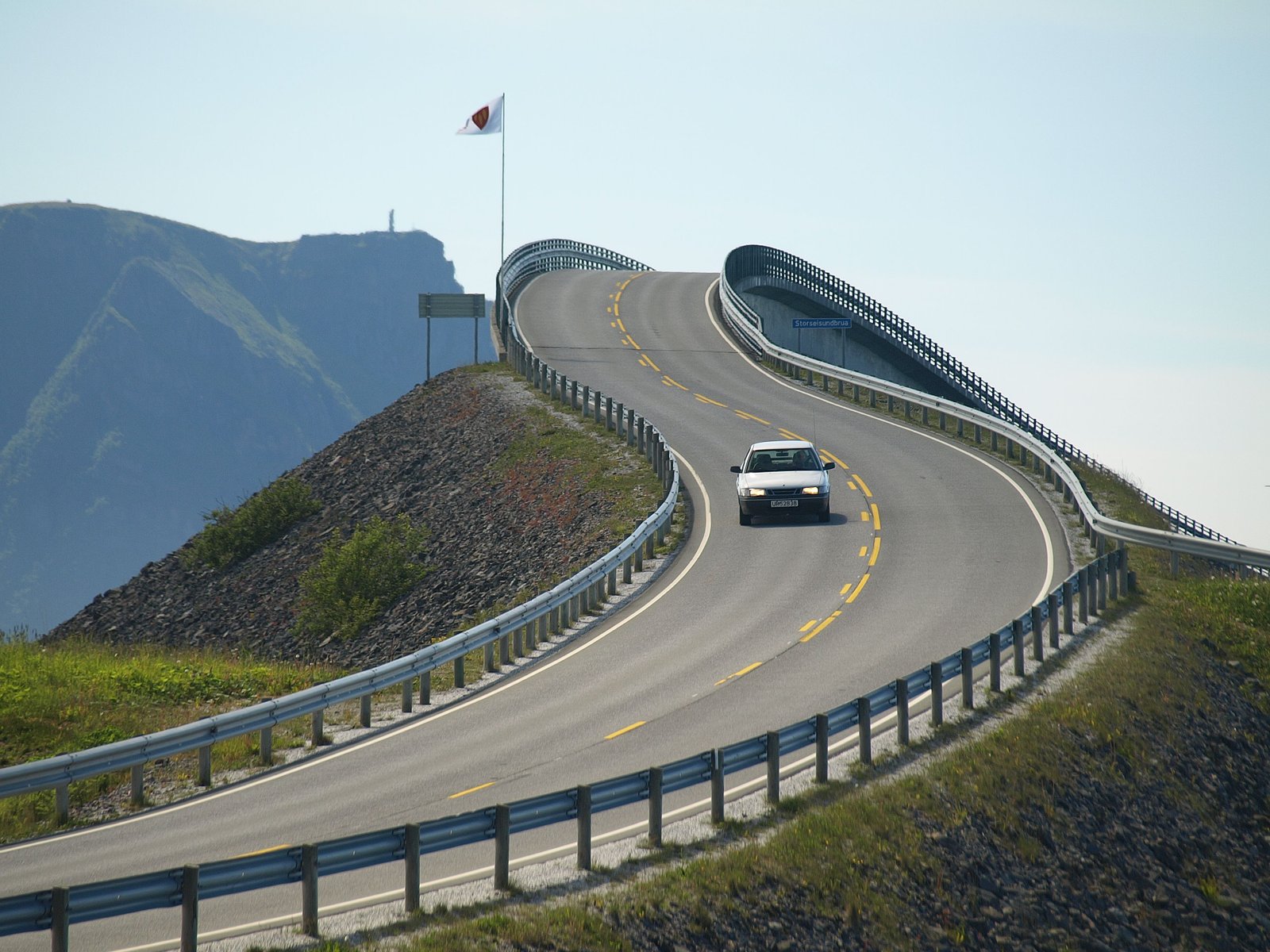
Driving a motorhome through Norway is one of the most rewarding ways to see the country, but the roads are not always what international visitors expect.
Outside the main highways, many routes are narrower, more winding and slower than a map suggests. Fjords, mountains, tunnels, ferries and changing weather can all turn a relatively short distance into a much longer drive. That is not something to fear — it is simply how a lot of Norwegian roads work, and it becomes manageable once you adjust your expectations and your planning.
This guide is about what driving a larger motorhome on narrow Norwegian roads is actually like, and the practical habits that make it easier. Norwegian traffic rules still apply on every road. What there is not is a single simple formula that decides which vehicle should reverse every time two drivers meet on a narrow stretch. Reduce your speed, keep well to the right, use passing places appropriately, and cooperate safely according to the road and the conditions. Know the size of your vehicle, allow more time than you think you need, and drive patiently.
Why Norwegian roads can feel different
A lot of Norwegian roads were built for a landscape that does not make road-building easy. Mountains, fjords, islands and narrow valleys mean the road often has to follow the terrain rather than cut straight through it, so even quite ordinary routes can be winding, narrow and slower than what many visitors are used to.
The main highways are generally wider and faster, and plenty of Norwegian roads are perfectly comfortable for a large motorhome. Not every Norwegian road is narrow or difficult. The point is that many roads outside the main network — especially coastal roads, mountain roads and rural routes — can feel different from what a distance on the map implies.
Fjords, mountains, tunnels, ferries and changing weather can all make a relatively short distance take much longer than the map suggests. A crossing you did not expect, a slow section behind other traffic, or a road that climbs and bends for kilometers can all add real time to a day. Planning around that, rather than against it, is the single biggest thing that makes motorhome travel in Norway less stressful.
Single-lane sections and passing places
On narrower roads you will often meet single-lane sections, where there is only room for one line of traffic. These are normal in Norway and they are not a sign that you have taken a wrong turn. They are managed with passing places — widened sections of road intended so that vehicles traveling in opposite directions can pass each other safely.
Keep well to the right and be prepared to stop. When a vehicle is coming toward you and the road is too narrow to pass where you are, use the nearest practical passing place rather than forcing two large vehicles through an unsafe gap. A driver may also use a passing place briefly to allow approaching or following traffic to pass.
Passing places must never be used for parking, resting, taking photographs or staying overnight. They exist so that traffic can keep flowing safely. A motorhome left in a passing place can create a real hazard by blocking the only place where vehicles can pass.
There is no universal rule that a particular vehicle always has priority or must always reverse. The right move depends on the road, the traffic and which vehicle has a suitable passing place closest to it. Move predictably, use the passing places as they are intended, and let the situation resolve itself with patience rather than rushing a tight pass.
Letting faster traffic pass
A large motorhome will often travel more slowly than local traffic on narrow or winding roads, and that is completely normal. Local drivers know the road, their vehicles are usually smaller, and they may have somewhere to be on a schedule you do not share. There is no need to feel pressured, and no need to drive faster than is safe for your vehicle and the conditions.
When a queue builds up behind you, use a safe pull-off, a designated stopping area or a suitable passing place briefly to let traffic pass. A passing place may be used for that short purpose only — never as a parking, rest or photo stop.
Only stop somewhere safe. Never stop where the vehicle blocks traffic, creates a hazard or prevents a passing place from being used for its intended purpose. If there is no safe place to pull over yet, keep driving calmly until one appears. Letting faster traffic pass is good manners, but it is never worth doing it in a way that puts you or anyone else at risk.
Mountain roads and steep grades
Some Norwegian routes include long climbs, sharp descents, tight bends and exposed sections where the road follows the side of a mountain or the edge of a valley. These roads can be beautiful, and they can also be demanding, especially in a larger and heavier vehicle.
A few cautious habits make mountain roads much easier to handle:
- Control your speed before beginning a long descent.
- Use an appropriate gear or the vehicle’s approved engine-braking system when suitable.
- Avoid relying continuously on the service brakes.
- Increase your following distance, because stopping takes longer on a steep or winding road.
- Follow the motorhome manufacturer’s instructions for descending steep grades.
- Drive according to the conditions rather than only the posted limit, especially when the road is wet, icy or visibility is poor.
- If you need a break, stop only in a safe designated area — never in a passing place or where you block the road.
The right approach depends on your specific vehicle, its transmission, braking system and weight. A heavy diesel motorhome and a lighter camper van do not handle a long descent the same way. Control your speed early, do not overwork the brakes, give yourself room, and follow the guidance that applies to your own motorhome before you take on a serious mountain route.
Tunnels
Norway has a large number of road tunnels, and they are a normal part of the network. Some are short and straightforward, while others are long, narrow or have limited shoulders, and a few feel quite enclosed when you are driving a large vehicle through them.
A few simple habits make tunnels easier and safer:
- Ensure the vehicle’s rear lights are illuminated before entering a tunnel. Daytime running lights do not always illuminate the rear lights.
- Use the appropriate headlights and follow all signs and speed limits.
- Keep a safe distance from the vehicle ahead, especially in a longer vehicle that needs more room to stop.
- Observe signed height, width, weight or other restrictions, and respect them absolutely.
- Never enter a tunnel that is closed.
- Never stop inside a tunnel except in an emergency or when directed.
- Pay attention to emergency exits, safety equipment, variable signs and radio instructions.
Tunnel sizes vary across Norway. The only figure that matters is the one on the sign at the entrance you are approaching. If a tunnel has a signed height, width or weight restriction, treat it as real and do not assume your motorhome fits just because a navigation app sent you that way.
Know the size of your motorhome
Knowing the real dimensions of your motorhome is one of the most useful things you can do before driving in Norway. On narrow roads, in tunnels, on ferries and in parking areas, the size of your vehicle is the thing that most often decides whether a route or a stop is comfortable or not.
Before you set off, make sure you know the motorhome’s actual:
- height, including roof-mounted equipment
- width, including mirrors where relevant
- total length, including bike racks and rear-mounted equipment
- maximum authorized mass and actual applicable weight information
These figures can matter for signed road restrictions, bridges, tunnels, ferries and parking areas. Remember to include the things that add to brochure figures: roof boxes, air-conditioning units, antennas, solar panels, bike racks, and trailers or towed vehicles. Check official signs and reliable route information rather than relying on assumptions. When a restriction is posted, treat it as binding for your vehicle.
Road signs and restrictions
Local signs in Norway may indicate restrictions on height, weight, width, length or other vehicle characteristics. These restrictions may reflect the physical or legal limitations of a road, bridge, tunnel or parking area, and they must be followed.
Road signs take priority over navigation apps. A sign that says a road is closed to vehicles over a certain weight or height applies to your motorhome if your motorhome is over that limit, regardless of what the app thinks. The sign is the authority on the actual road in front of you; the app is a general guide that does not always know about local restrictions, temporary closures or how the road feels in a large vehicle.
If you are unsure whether a restriction applies to your vehicle, the safe choice is to treat it as if it does and find another route. Working out whether you fit after you are already committed to a narrow section is much more stressful than simply taking an easier road in the first place.
Navigation apps are useful, but not perfect
Navigation apps are genuinely useful for planning a motorhome trip in Norway. They help with route options, estimated times and finding fuel or stopping places. But they are not perfect, and treating any app as a final authority on what your motorhome can comfortably drive is a mistake.
An app may suggest a route that is technically open but uncomfortable or unsuitable for a large motorhome — a very narrow section, a tight tunnel, a steep and winding climb, or a road that is fine for a car but awkward for a longer, wider vehicle. Drivers must follow official signs, closures and restrictions even when the navigation app suggests continuing.
Check the route ahead, especially on longer or more remote sections, and use official road information when you are uncertain. If an app sends you down a road that looks doubtful for your vehicle, stop safely, reassess, and choose a different route. Apps are helpful tools. They are just not a substitute for knowing the size of your vehicle and judging the road in front of you.
Weather can change the road quickly
Rain, wind, snow, ice and fog can all make a narrow road much more demanding very quickly. A road that is easy in dry, clear conditions can become slippery, slow and hard to see along in poor weather. Wind, fog, rain, snow and ice can affect a high-sided motorhome more strongly than a smaller car.
Mountain roads in particular can close temporarily due to weather or seasonal conditions. Some passes are only open for part of the year, and others can close for hours or days at a time because of snow, wind or avalanche risk. These closures happen because driving the road has become genuinely unsafe.
Check current road information before driving through mountain or remote areas. If the weather turns while you are on the road, slow down, increase your following distance, and be ready to stop or turn back if the conditions get worse than you are comfortable driving in. There is no schedule worth pushing through a road you cannot see.
Meeting buses, trucks and other large vehicles
On narrow roads you will sometimes meet buses, trucks and other large vehicles coming the other way, and a meeting between two large vehicles on a narrow section needs care from both drivers. Professional drivers in Norway are used to these roads and usually handle the situation calmly.
A few practical habits help:
- Slow down early when you see a large vehicle approaching, so you have time to think rather than reacting at the last moment.
- Look ahead for a suitable passing place or a wider section where the meeting can happen safely.
- Leave room for the other vehicle, especially if it is longer or wider than yours.
- Do not force a meeting in a section that is too narrow for both vehicles. It is better to stop and wait than to squeeze through with centimeters to spare.
A gesture from a professional driver may help clarify the situation, but you remain responsible for checking that it is safe to move. Never proceed solely because another driver waves you forward. The goal is simply for both vehicles to get past each other safely and continue. A little patience from a motorhome driver goes a long way here, and most professional drivers will respond in kind.
Do not plan by distance alone
One of the biggest planning mistakes visitors make in Norway is treating distance as a reliable guide to driving time. It is not. A hundred and fifty kilometers in Norway can sometimes take much longer than travelers expect, because of road conditions, ferries, tunnels, scenic routes and the simple fact that a narrow, winding road slows you down.
The same distance on a main highway and on a narrow coastal road can take very different amounts of time, and a route that includes a ferry crossing has the ferry schedule built into it whether you like it or not. Planning a day purely by kilometers is a reliable way to end up driving under pressure, which is the last thing you want on roads that reward a calm approach.
There is no reliable national formula for converting distance into driving time. Check the actual route, allow generous time for ferries and slower sections, and treat the estimated arrival time as flexible.
A simple checklist before a narrow-road day
Before a day that includes narrow or mountain roads, a short checklist helps:
- Check current road conditions and closures for your route.
- Check the weather forecast for the areas you will drive through.
- Know your vehicle height, width, length and weight.
- Check signed restrictions on the planned route that could apply to your motorhome.
- Allow enough fuel or battery charge for remote stretches.
- Know safe stopping options along the way.
- Plan adequate breaks and avoid tired driving.
- Keep arrival times flexible, and treat your estimate as approximate.
Running through this takes a few minutes the evening before, and it turns a narrow-road day from something you are guessing about into something you have already thought through.
What I Would Do on a Difficult Road
If a road started to feel more demanding than I expected — narrower, steeper, more exposed or in worse condition than I was comfortable with — I would slow down first, because almost everything gets easier when you reduce your speed. I would stop safely at the next suitable place, not in a passing place or somewhere that blocked the road, and take a moment to reassess. I would look at the route ahead, check the current road and weather information, and seriously consider an easier alternative rather than pushing on just to get through. There is no prize for taking the hardest route, and a detour on a wider, calmer road is almost always a better outcome than inching along a section you are not comfortable with. The motorhome is there to give you a good trip, not to test your nerve.
Final thought
Narrow Norwegian roads are not something to be afraid of. They are manageable when you drive patiently, know the size of your vehicle, and allow enough time for the journey to be what it actually is rather than what the map implies.
The travelers who enjoy motorhome trips in Norway most are usually the ones who plan generously, let faster traffic pass when it is safe, respect signs and restrictions, and treat the road rather than the schedule as the thing that sets the pace. Do that, and the narrow roads become part of what makes traveling through Norway by motorhome so memorable.
Road conditions, restrictions and seasonal closures can change, sometimes with little notice. Always check current road and weather information with official Norwegian sources before driving, especially on mountain and remote routes. Last reviewed: September 2026.