Motorhome Etiquette in Norway: How to Travel Responsibly
Motorhome & Road Trips · 10 min read
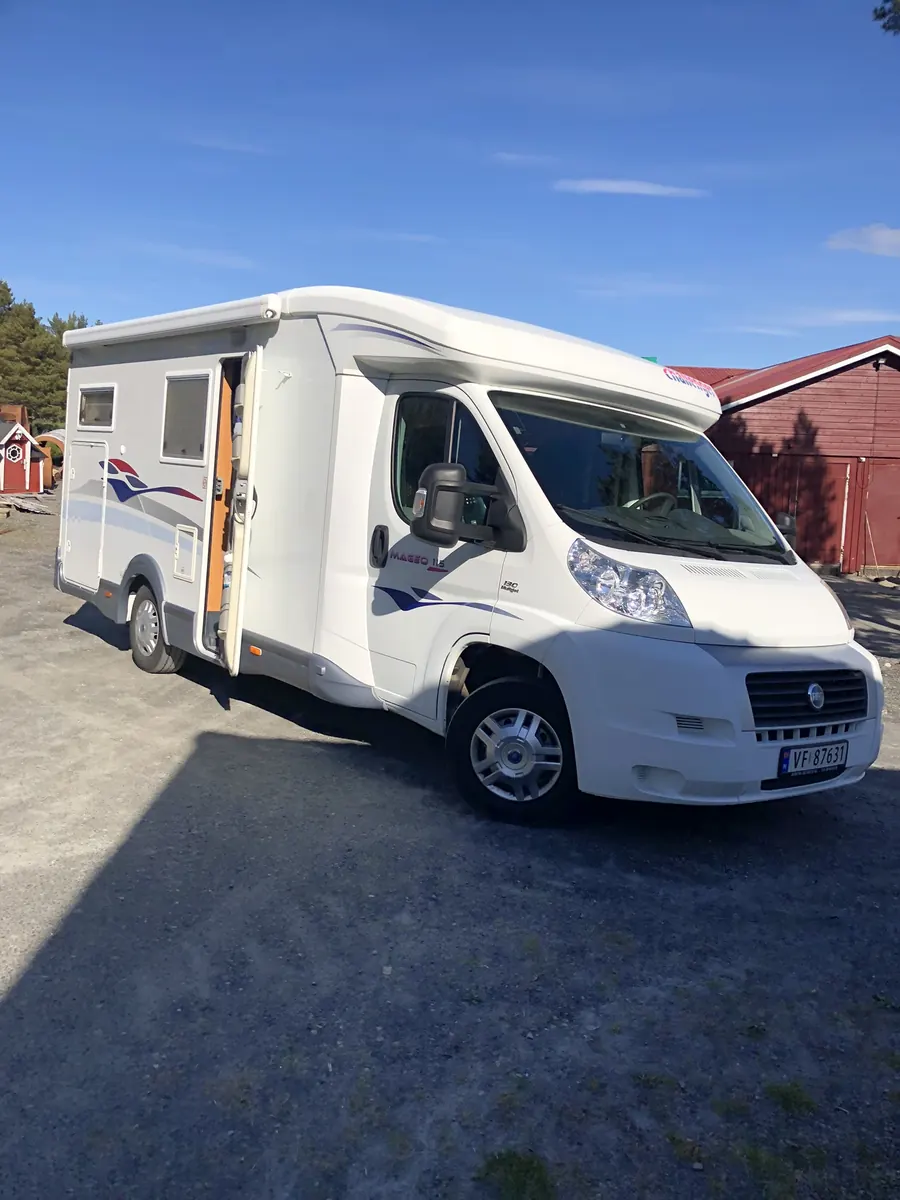
Traveling through Norway by motorhome gives you a kind of freedom that is hard to match. You can wake up beside a fjord, move on when you want, and carry everything you need with you. It is one of the best ways I know to see this country.
That freedom depends on something that is easy to take for granted: the people who live here continuing to welcome motorhome travelers. Popular places in Norway can fill up quickly, especially in summer, and a small number of inconsiderate stops can be enough to bring in new restrictions for everyone.
Most motorhome travelers behave well, and the ones who cause problems usually do so without meaning to — they simply have not thought about how a stop looks from the other side. The aim of this guide is to share the practical habits that keep motorhome travel in Norway welcome, so that the next traveler — and the one after that — finds the same open, generous country that you did.
Why motorhome etiquette matters
Norway is unusually open to people traveling through it. The right to roam, the network of designated motorhome pitches and the general attitude of residents toward visitors all make motorhome travel here easier than in many countries. That openness is not automatic, and some municipalities and popular destinations already have local parking and overnight restrictions.
In summer, the pressure is real. A quiet overlook that feels empty in the evening can have several motorhomes in it by morning, and a small village road that locals use every day can suddenly feel crowded when a handful of large vehicles stop in the wrong places. None of this is a reason not to travel by motorhome — it is a reason to travel considerately.
Responsible behavior helps destinations remain welcoming and can reduce the need for additional parking and overnight restrictions. When a place experiences repeated problems with noise, litter, blocked access or improper waste disposal, local authorities or landowners may introduce tighter rules.
Do not treat every open space as a campsite
There is an important difference between parking a motorhome and setting up camp. A place where parking is legal is not automatically a place where overnight stays or camping are allowed, and it is not automatically a place where you should pull out chairs, tables, awnings, a grill and a set of equipment around the vehicle. Signs, parking conditions, local regulations and property rights determine what is allowed at each location.
A lot of areas that tolerate a parked motorhome for a short stop do not tolerate a camp being built around one. Extending the awning, spreading chairs across the ground and staying for long periods changes a short, quiet stop into something that looks — and is treated — like camping, and that is much more likely to lead to complaints and restrictions.
Follow local signs and restrictions. If a sign says no overnight stays, that is the answer, even if the spot looks ideal. When you want to set up properly, use a campsite or a designated motorhome pitch where that is exactly what the place is for.
Respect private property
Roadside land, driveways, farm entrances and open-looking areas beside the road can still be private property, even when there is no fence or sign. A patch of ground that looks unused to a visitor may be someone’s field, their access road, or the approach to their home.
Norway’s right to roam provides broad access for non-motorized outdoor recreation on uncultivated land, but it does not grant a general right to drive or park motor vehicles on private or uncultivated land. Motorhomes remain subject to road rules, parking rules, property rights, signs and local restrictions. Assuming otherwise is one of the most common ways visitors end up in awkward conversations with landowners.
If you want to stop on private property, ask the landowner first rather than assuming the space is available.
Never block passing places
Passing places — the widened sections on narrow Norwegian roads — exist so that vehicles can pass each other safely. They are a working part of the road, not a convenience for parking.
A passing place is not a parking space, a picnic area or an overnight stop. Never use one for parking, resting, photographs or overnight stays. Stopping in one can force other drivers into difficult or dangerous situations, especially when large vehicles or local traffic need to get through. On a single-track road, a blocked passing place can mean someone has to reverse a long way to let you past, which is exactly what the passing place was meant to prevent.
The rule is simple: use a passing place only briefly for its intended traffic purpose — letting vehicles pass. If you need to stop, find a proper parking area or a designated pitch.
Keep noise down
Noise is one of the things residents notice fastest, and it does not take much to become a problem. Generators running late, music from speakers, doors slamming, engines idling and late-night conversation all carry further than people expect, especially in quiet valleys and small communities where the background noise is very low.
Quiet behavior matters most near homes, in small communities and in shared overnight areas where several motorhomes are stopped close together. What feels like normal activity to you may be the thing that wakes someone up or ruins their evening.
A practical habit is to treat late evening and early morning as quiet time, to keep generators and music off overnight, and to assume that someone is always closer than they sound. None of this stops you from enjoying your trip — it just stops your trip from becoming someone else’s problem.
Take your trash with you
Leaving no trace is the baseline. Whatever you bring in, you take out again — food waste, packaging, bottles, cans, and anything else you have used. A stop should look exactly the way it did before you arrived.
Use proper waste facilities, and do not treat a small public trash bin as a place to empty a motorhome’s worth of household waste. Overflowing a small bin with bags of motorhome trash is not considerate, and it is one of the fastest ways to get a bin removed or a stop restricted. If there is no suitable facility, carry the waste to the next one.
This includes grey water residue, cigarette ends and food scraps. None of them belong left on the ground, and all of them are noticed.
Toilets and wastewater
Empty toilet waste and grey water only at facilities intended for motorhome disposal, such as designated service stations, campsites or motorhome areas. Never empty them into nature, roadside drains or any toilet or drain that is not specifically approved for that purpose. Follow the instructions displayed at the facility.
A regular public toilet is not designed for motorhome waste, and using it that way can block it and ruin it for everyone. Roadside drains often run straight into nearby water, so they are never an acceptable place for wastewater.
If you cannot find a proper disposal facility, drive to the next place that has one rather than improvising.
Fresh water
For filling up with fresh water, use a water point that is clearly marked as drinking water or potable water — often at campsites and motorhome service areas.
Do not assume that an outdoor tap at a farm, marina, parking area or private property is public or provides drinking water. It may be private supply, may not be potable, and may not be intended for visitors to use. Filling a large motorhome tank from someone’s private tap without asking is the kind of thing that causes friction quickly.
If the water is not clearly labeled, ask the operator or use another verified source. Planning your water stops the same way you plan your waste stops keeps the whole day simpler.
Do not occupy more space than you need
In busy parking areas, take one space and stay within it. Where spaces are marked, park within the markings rather than straddling lines or taking up more than your share. Where they are not marked, choose a footprint that leaves sensible room for others.
Avoid spreading into neighboring spaces with chairs, bikes, tables or equipment, especially in popular areas where space is under pressure. A motorhome that takes up two or three spaces because of its outdoor setup is the kind of thing that turns a relaxed parking area into a tense one.
The same applies to shared overnight stops. If several motorhomes are using the same area, leave room for others to come and go, and do not block the route out.
Respect local communities
Many of the scenic Norwegian places motorhome travelers want to visit are also ordinary places where people live and work. A postcard-pretty village is still someone’s daily environment, with homes, businesses, farms and docks that locals need to reach.
Do not block homes, businesses, farm entrances, docks or local access roads, even for a short stop. A vehicle that is “just there for a minute” can still prevent someone from getting to work, getting a boat in or out, or reaching their own property.
A good habit is to look at a stop from a resident’s point of view before you settle in. If your vehicle would get in the way of ordinary daily life there, it is the wrong spot.
Support local businesses
One of the easiest ways to be a welcome visitor is to be a customer. Buying groceries, fuel, a meal or a coffee, or using a local campsite, puts something back into the small communities that receive large numbers of visitors through the summer.
This is not an obligation, and there is no need to feel guilty about self-catering or traveling on a budget. It is simply a natural part of traveling through places that host a lot of people. A village that sees motorhomes stop, shop and move on is in a much better position to keep welcoming them than one that only sees vehicles park for free and leave nothing behind.
Where there is a local campsite or a designated motorhome pitch with a small fee, using it is often the simplest way to combine a good stop with supporting the place that makes it possible.
Be considerate at viewpoints and scenic stops
Scenic roadside stops are some of the most popular places in Norway, and they can become congested quickly in season. A viewpoint that feels spacious at midday can be full by evening.
Keep your stop reasonable — long enough to enjoy the place, not so long that others cannot get a turn. Park only in marked or permitted spaces, avoid blocking traffic, and never use a marked accessible parking space without the appropriate authorization. If the area is full, continue to another legal stopping place instead of parking on the verge or road edge.
If a stop is busy, treat that as a signal to move on rather than a challenge to squeeze in.
Campfires and open flames
Norway has a general restriction on lighting bonfires and using barbecues in or near forests and other uncultivated areas from April 15 through September 15. During this period, a fire is permitted only when it is clearly safe and there is no risk of it spreading. Municipalities may introduce stricter temporary restrictions, particularly during dry conditions. Travelers must check current local rules before using a grill, fire pit or open flame.
Outside the general restriction period, you still need to use common sense and avoid creating a fire risk. Local rules and temporary bans can apply at any time.
Dogs and animals
Dogs must generally be kept on a leash from April 1 through August 20, inclusive. Municipalities, protected areas and specific locations may have longer or stricter leash requirements, so always check local rules.
Be especially careful around livestock, reindeer and wildlife, and respect any local signs about dogs. Clean up after your dog wherever you stop.
A simple rule for responsible motorhome travel
If I had to reduce all of this to one principle, it would be this: leave the place in a condition that makes the next traveler welcome too.
That is a practical test you can apply to any stop. Would the next motorhome to arrive find this spot clean, accessible and still open to overnight stays? Would a local resident walking past be glad, or relieved, that you stopped here? If the answer is yes, you have done it right. If the answer is “they probably would not notice,” that is fine too — the goal is not to be noticed, it is to leave no reason for the place to be closed off next time.
Poorly managed or heavily used stops can lead to tighter local restrictions, which is another reason considerate behavior matters. Keeping destinations welcoming is, in the end, a matter of enough travelers simply not being the reason a restriction gets written.
A quick etiquette checklist
A short list to run through at any stop:
- Park only where permitted.
- Never block passing places, entrances or access roads.
- Keep noise low, especially in the evening and near homes.
- Take all your trash with you.
- Dispose of toilet waste and wastewater at proper facilities only.
- Respect private property — when unsure, assume it is private or ask.
- Follow local overnight restrictions and signs.
- Do not spread camping equipment into neighboring spaces.
- Respect residents, livestock and wildlife.
- Leave the area clean and exactly as you found it.
It takes a few seconds and it is the difference between a stop that causes no problems and one that does.
What I would do if a place feels too crowded
If I arrived at a parking area or a viewpoint and it was already crowded — motorhomes squeezed in, cars circling for a space, the feel of a place under pressure — I would not try to force my way into the last gap. I would keep driving and find another legal place to stop, even if it meant a bit more time behind the wheel. Squeezing into an already crowded spot does not make the situation better for anyone: it makes the crowding worse, it increases the chance of blocking someone in, and it is exactly the kind of pressure that turns a tolerated stop into a restricted one. A little patience and a few extra kilometers are a small price for a calm, welcome stop instead of a tense, crowded one.
Final thought
Motorhome travel in Norway is one of the best ways I know to see this country, and it stays that way because most travelers treat the place and the people well.
Considerate behavior is one of the easiest things you can do on a motorhome trip — easier than planning a route, easier than finding a ferry, easier than most of the practical work of traveling. It costs almost nothing, and it is what keeps the freedom to travel this way open for the next visitor, and for the people who live here.
Travel kindly, leave no trace, and Norway will keep welcoming you back.
Local parking, camping, fire and waste-disposal rules can vary by municipality and location, and they can change with the season. Always check municipal information and local signage for the area where you plan to stop, and follow the rules that apply to that specific place. Last reviewed: September 2026.