Ferries with a Motorhome in Norway: What You Need to Know
Motorhome & Road Trips · 9 min read
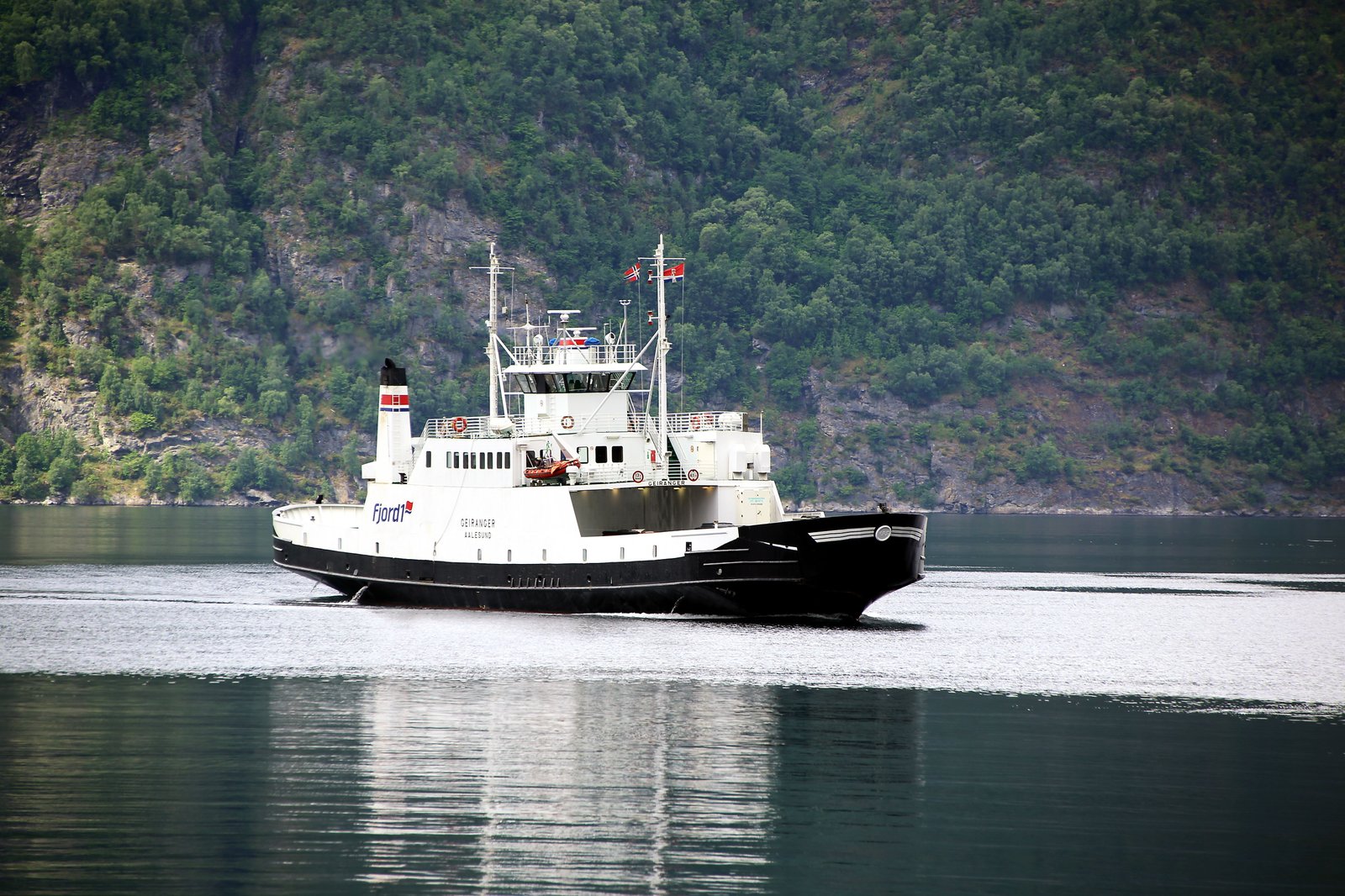
If you are planning a motorhome trip through Norway, especially along the west coast, the fjords or the coastal regions, ferries are going to be part of your journey.
That is not a complication to worry about. It is simply how a lot of Norwegian roads work. Where a fjord or a stretch of sea blocks the road, the route continues by ferry, and motorhomes can normally use the same ordinary vehicle ferries as cars.
The thing that catches visitors out is not the ferries themselves but the details around them: whether you need to book, how the price is calculated, how you pay, and what to do when you arrive at the terminal. This guide walks through those practical questions so you can plan your crossings with confidence.
Why ferries are part of driving in Norway
Norway’s geography is the simple reason ferries are everywhere. The coastline is long and broken up by fjords, islands and sounds, and in many places there is no road that runs all the way around the water. Instead of building a bridge or a tunnel everywhere, the road network simply continues by ferry.
That means taking a ferry is often just part of following the route, not a separate excursion or a tourist activity. You drive to the quay, join the queue, cross the water, and drive off on the other side to continue on the same road. For a lot of journeys, the ferry is the road.
This is especially true on the west coast and in the fjord regions, where a single day’s drive can include several short crossings. Once you accept that ferries are part of the network rather than a special event, planning a motorhome trip in Norway becomes much less stressful.
Do motorhomes need to book ferries in advance?
Whether you need to book a ferry in advance depends on the route. Many short road ferries operate on a first-come, first-served basis. You turn up, join the vehicle queue, and board the next departure that has space for you. On routes like these, advance booking is often not available or not necessary, and the system is designed around simply turning up.
Longer crossings, seasonal services and popular tourist routes can be different. Some of them allow, recommend or require reservations, and on busy summer crossings a reservation can be the difference between getting the departure you want and waiting for the next one with space.
The arrangements vary by operator and route, so check the official operator information for your specific route and travel date before you set off. Do not assume one rule covers every ferry in Norway.
How ferry prices are calculated
Ferry prices in Norway are not a single flat fee that every vehicle pays. They vary by route and operator, and on many Norwegian road ferries the fare for a motorhome is affected by the vehicle’s total length. A longer motorhome can cost more than a standard passenger car on the same crossing, because the price is often tied to how much deck space the vehicle takes up. This is normal and expected, not a surprise charge aimed at campers.
Anything that adds to the vehicle’s length can change the fare. Bike racks, bicycles, rear-mounted equipment and trailers can all increase the measured or registered total length, and that longer figure is what the fare may be based on. A motorhome that is six meters in the brochure can easily be longer once a bike rack and bikes are fitted.
Ferry fares change over time and differ between routes, so I do not quote exact prices here. The only figure you should rely on is the one published by the operator for your specific route and vehicle. For routes that use AutoPASS for Ferry, check the official AutoPASS for Ferry price information for current fares.
How do you pay for a ferry in Norway?
Payment methods depend on the route and operator, and not every Norwegian ferry works the same way. On participating Norwegian road ferries, the principal payment options are:
- AutoPASS for Ferry prepayment agreement: requires an eligible AutoPASS tag and money deposited into the ferry account. Qualifying crossings are charged to the prepaid balance with the applicable ferry discount.
- FerryPay: you register a debit or credit card, and the full-price ferry fare is charged automatically. FerryPay does not provide a discount.
- No payment agreement: on participating automatic routes, the vehicle’s license plate can be recorded and an invoice sent to the registered owner afterward. An invoice fee may apply.
- An ordinary AutoPASS agreement and tag can be used for payment on many Norwegian ferry routes, but there are exceptions. Travelers must not assume that every route accepts the same arrangement or offers the same discount.
These options apply to participating routes, not to every ferry in Norway. Other crossings, including some smaller or seasonal services, may use operator-specific payment arrangements. Before you travel, check the current payment information for the route you plan to use.
Road-toll discounts and ferry discounts are separate
Road-toll discounts and ferry discounts are separate. Having an AutoPASS tag for road tolls does not automatically guarantee the same discount on every ferry. A ferry that uses an AutoPASS-based payment system may have its own pricing, its own discount structure and its own requirements, set for the ferry route rather than copied from the road-toll system.
If you want the relevant ferry discount, a separate AutoPASS for Ferry prepayment agreement may be needed, with an eligible tag and money in the ferry account. Do not assume your road-toll arrangement carries over to every ferry crossing in the same way. Check the current ferry-specific information for the route you plan to use before you rely on it.
Some ferry routes are free or use seasonal fares
Some Norwegian ferry routes are free, while others use seasonal fares that change at different times of year. Do not assume that every crossing has a charge, or that the fare you found for one season applies to another. Check the current route information for your travel date instead of relying on a general rule.
What happens when you arrive at the ferry terminal?
For most road ferries, the process at the terminal is straightforward and well-signposted. A typical sequence looks like this:
- Follow the signs for the ferry route and destination you are taking.
- Join the correct lane for your vehicle.
- Wait until the crew directs you to board.
- Drive slowly and follow all crew signals.
- Park where instructed, apply the parking brake and follow the vessel’s safety instructions.
Boarding procedures can differ by ferry and route, so always follow the crew’s directions on the day. The crew does this many times a day, and listening to them is the simplest way to get it right.
Can you stay inside the motorhome during the crossing?
Whether passengers may remain inside the motorhome depends on the vessel, the route and the location of the vehicle deck. Always follow the crew’s instructions and the safety information provided on board.
Motorhome size matters
Knowing the size of your motorhome is one of the most useful things you can do before a ferry trip in Norway. Vehicle dimensions can affect both the price you pay and, on some routes, the space available for you on board.
Before you travel, make sure you know the actual total length and height of your motorhome as you are driving it, not just the brochure figure for the base vehicle. Include anything permanently or temporarily fitted that adds to the size: bike racks on the rear or roof, roof boxes, antennas, solar panels, and any other equipment that extends the length or height.
Space and restrictions are handled by individual operators and routes rather than by a single national rule. The practical step is to know your own dimensions and to check the route information if you are unsure whether your vehicle fits.
Motorhomes with trailers
If you are towing a trailer behind your motorhome, that changes the picture. A trailer adds to the total vehicle combination length, and on ferries that price by length, a longer combination can mean a higher fare.
Trailers can also affect how the vehicle is queued and parked on board, since the crew need to fit a longer combination into the available deck space. On some routes that is straightforward, and on others it may need a bit more planning.
Check the route and operator rules before you travel if you are towing. Knowing your total combination length, and confirming how the operator handles motorhome-and-trailer combinations, avoids surprises at the quay.
Busy summer routes
Ferries in popular tourist areas can be noticeably busier in summer, when both Norwegian and international travelers are on the road. The practical approach is to allow extra time. If a crossing is likely to be busy, arriving earlier than you strictly need to gives you a better chance of getting the departure you want, and it removes the stress of a tight connection.
Waiting times vary considerably by route, season and available capacity. On some crossings the next departure is minutes away, and on others it is hours. That is exactly why checking the timetable for your specific route matters more than any general rule.
Driving on and off the ferry
Driving a larger vehicle on and off a ferry is not difficult, but it does deserve a bit of care. A few practical things make the difference:
- Approach the ramps slowly and at a steady speed — ramps can be steep, especially at low or high water.
- Follow the crew’s signals at all times; they are guiding you for a reason.
- Be aware of low ground clearance or a long rear overhang, which can scrape on ramps or deck edges.
- Leave enough space from the vehicle in front, as the crew directs, so everyone can be parked and unloaded safely.
- Avoid rushing when disembarking — wait for your row to be directed off, and drive off at a controlled speed.
None of this is complicated, and most motorhome travelers manage it without any issue on their first crossing. The key is simply to take it slowly, watch the crew, and not let the size of the vehicle push you into hurrying.
A simple ferry checklist
Before a ferry day, running through a short checklist saves a lot of hassle:
- Check the current timetable for your crossing.
- Check the booking requirements for that route.
- Know your motorhome’s actual total length and height, including fitted equipment.
- Include bike racks, trailers and any other rear-mounted equipment when checking your dimensions.
- Check the current fare and payment method for the route.
- Arrive early on busy routes, especially in summer.
- Follow the crew’s directions at the terminal and on board.
It takes a few minutes the evening before, and it turns a ferry day from something you are guessing about into something you have already prepared for.
What I Would Do Before a Ferry Day
The evening before a ferry day, I would look up the specific route I planned to take and confirm the timetable for the next day, because departures can change and I do not like relying on a timetable I saw weeks ago. I would check whether the route needs a reservation, and I would confirm the payment method so I knew whether I needed a registered account, a tag, or something else. I would note the operator’s website in case I needed it on the road. Most of all, I would avoid planning an overly tight driving schedule around several ferry crossings in one day. Ferries run on their own timetable, not on mine, and building in slack means a delayed departure or a missed crossing becomes a minor adjustment rather than a ruined itinerary.
Final thought
Ferries in Norway are usually straightforward once you understand that they are simply part of the road network. You drive on, you cross, you drive off, and you continue your trip.
The things that make a ferry day go smoothly are the unglamorous ones: knowing your vehicle’s dimensions, checking the route and timetable, understanding how payment works for that specific crossing, and following the crew’s instructions. Do those, and the ferries stop being something to worry about and start being one of the most enjoyable parts of traveling through Norway by motorhome.
Ferry schedules, prices, payment systems and booking arrangements vary by route and operator and can change seasonally. Always check current information with the ferry operator for the specific route you plan to use before traveling. Last reviewed: September 2026.