15 Beautiful Places to Visit in Norway — From Famous Landmarks to Quiet Local Gems
Places to Visit · 15 min read
Norway is a genuinely difficult country to plan a trip around, and I think that is worth saying honestly before any list of places. There are fjords, islands, mountains, valleys, scenic roads, small villages, lively cities and viewpoints almost everywhere you look, and the distances between them are longer than the map suggests.
This is not meant to be an endless bucket list. If you try to see all of Norway in one trip, you will spend most of it in a car or on a ferry and very little of it actually anywhere. My honest advice is to choose fewer regions and experience them properly — a few days in one area is almost always more rewarding than a single afternoon in five.
What follows are 15 places I would genuinely recommend, from the famous landmarks most first visitors want to see to quieter regions I would show a friend. Use it to help decide where to go in Norway, not to tick off every name.
1. Geirangerfjord
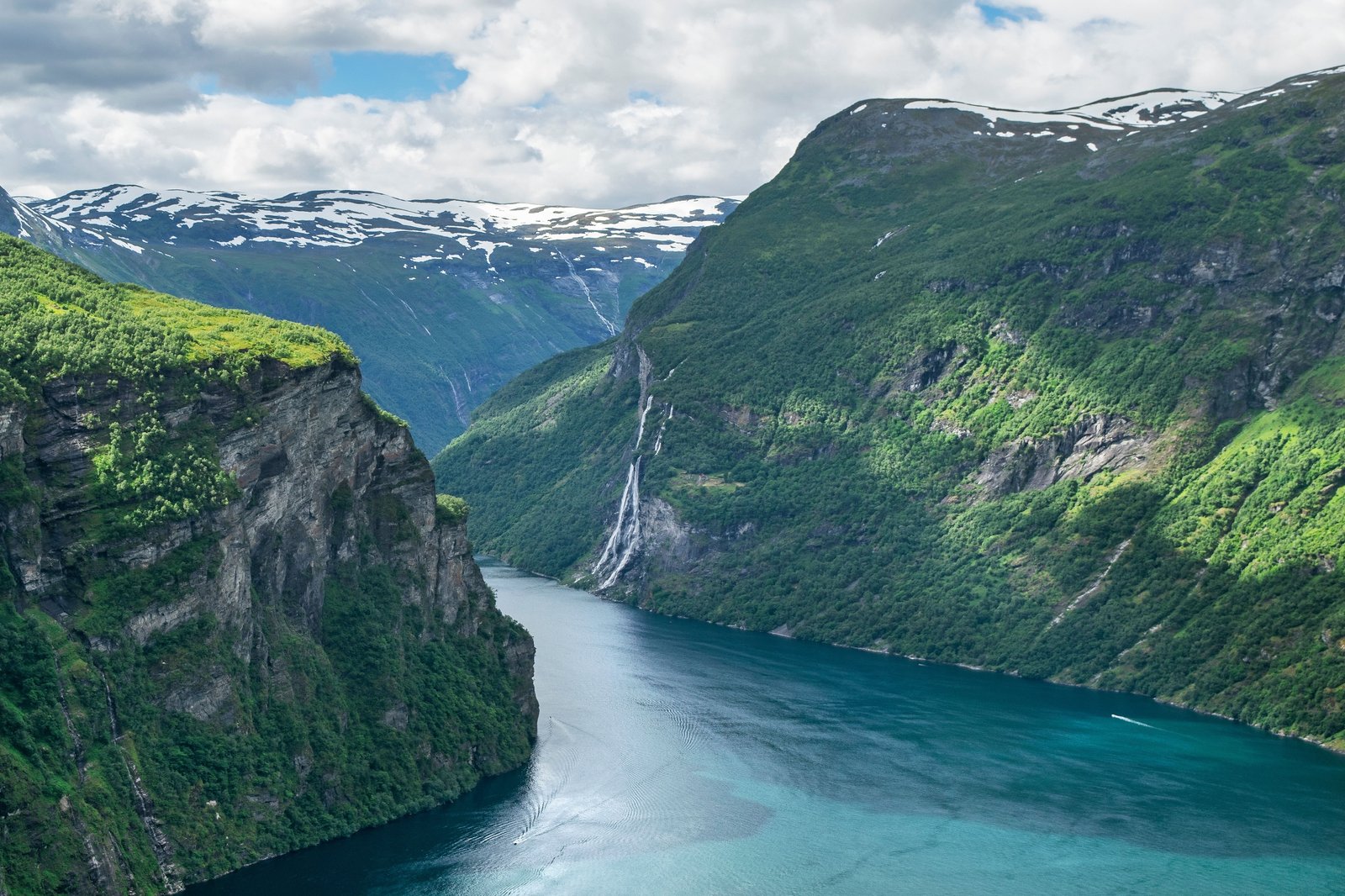
For a first trip to Norway, Geirangerfjord is the classic postcard experience — steep cliffs, deep water, waterfalls and a fjord that looks exactly the way Norway does in photographs. It is one of the most famous places to visit in Norway, and that fame is earned.
Think about how you see it. The view from the water on a sightseeing boat is the iconic one, but the overlooks from above, such as Flydalsjuvet and the Eagle Road, give you a completely different sense of scale. Geiranger village itself is small and very busy in peak summer, so I would not plan to stay right in the village if you want quiet. It works well as a road-trip stop or a one-to-two-day base rather than a long stay, and it pairs nicely with the wider Sunnmøre region if you want to keep moving.
2. Ålesund
Ålesund is one of those Norwegian cities where the setting and architecture are as memorable as the attractions themselves. After a fire in 1904, the town was rebuilt in Art Nouveau style, and the result is a dense, colorful waterfront of towers, turrets and ornate facades packed between islands and sea. Climbing the steps to the Aksla viewpoint gives you the best overview of the town and the surrounding archipelago.
Ålesund is also a practical base. It is well placed for exploring the Sunnmøre coast and Geirangerfjord, with ferry and road connections in several directions, so you can use it as a hub and take day trips outward rather than moving accommodation every night. Travelers who want a bit of city life — cafés, restaurants, architecture — alongside fjord and coastal scenery will find it a calmer alternative to staying in the busiest fjord villages.
3. The Atlantic Road
The Atlantic Road is one of the road trips I would personally include on any Norway road trip by car. Norwegian Scenic Route Atlanterhavsvegen is approximately 36 kilometers long and runs between Kårvåg and Bud, hopping across small islands and skerries over a series of curved bridges, with the open sea on either side. The famous bridge section that connects Averøy with the mainland is part of this wider scenic route. The official 36-kilometer scenic route takes approximately one hour to drive without stops, but allow considerably more time if you want to use the designated viewpoints and parking areas.
The character of the Atlantic Road changes with the weather. A calm, clear day brings wide ocean views, while strong wind and rough conditions can make the exposed sections hazardous. Check the forecast, follow any warnings and stop only in designated parking areas. The route works best as a memorable part of a wider coastal road trip rather than as a destination on its own, and it pairs naturally with the nearby Tustna and Aure area. If you are planning a wider driving trip, our driving in Norway guide covers tolls, ferries and road conditions worth knowing.
4. Lofoten
Lofoten is the place I would send someone who wants the most dramatic version of the Norwegian coast — sharp peaks dropping straight into the sea, white-sand beaches, old fishing villages and rorbu cabins that have become almost as photographed as the mountains behind them. It is genuinely extraordinary, and it earns its reputation.
Slow down rather than rush. Lofoten rewards staying a few days in one village and walking, cycling or just being there, far more than it rewards driving the whole archipelago in a day. Reine, Henningsvær and the beaches around Ramberg are all worth time. The main practical consideration is season: summer brings midnight light and the busiest crowds, while winter is quieter, darker and a genuinely different experience. It works as a slower stay, a road trip, or a hiking trip depending on when you go, and I would not try to combine it with too many other regions in the same week.
5. Bergen
Bergen is the choice I would make if you want city life, history and easy access to fjord experiences in the same trip. Bergen was one of Norway’s most important medieval cities and served as the country’s capital during the 13th century, and that history shows in the Hanseatic wharf of Bryggen, the old wooden warehouses that line the harbor, and a generally more lived-in, working-city feel than a town built only for tourism.
Bergen also works well as a base. The Flåm Railway, the Sognefjord and the Hardangerfjord are all reachable on organized or self-planned day trips, so you can sleep in a real city and still see deep fjord scenery without packing up each morning. Some of those day trips can be long, though, so it is worth planning them carefully rather than cramming several into a single day. Rain is common in Bergen, so bring a waterproof layer and do not build your entire itinerary around clear weather. It works as a city break, a fjord-trip base, or a natural first or last stop on a western Norway itinerary.
6. Tromsø
Tromsø is the destination I would recommend especially for winter atmosphere and the Northern Lights in Norway. It sits well above the Arctic Circle, which means long, dark winter nights and a real Arctic feel, but it is still a proper city with cafés, restaurants, a university and enough infrastructure to make a winter trip straightforward rather than an expedition.
Tromsø’s popularity means it books up far in advance and prices reflect that, so reserve accommodation and activities early during the popular winter periods. It is a strong, practical choice for a first Arctic Norway trip. Local guides may travel beyond the city in search of clearer skies, which can improve your chances on a cloudy night, but no tour can guarantee that the Northern Lights will appear. It is not the only good aurora destination, though. If seeing the lights is your main goal, our Northern Lights in Norway guide goes into season, weather and realistic expectations in more detail. Tromsø works as a winter city break, an aurora trip, or an accessible introduction to northern Norway.
7. Senja
Senja is the destination I would suggest if you are drawn to the dramatic scenery of northern Norway but want something quieter than the busiest parts of Lofoten. Norway’s second-largest island, it sits southwest of Tromsø and packs a surprising range into a compact area — sheer mountains on the outer coast, gentler farmland and forests on the inside, and quiet roads linking small fishing communities.
Senja still feels like a place where people live and fish rather than a destination built around visitors. The western coast, with stops along the Norwegian Scenic Route, is the dramatic side; the eastern side is softer and greener. It works for a road trip, a hiking trip, or a slower coastal stay, and it is a good alternative for travelers who find Lofoten too busy in peak summer. As always with the north, the season shapes the experience completely — summer light and winter dark are almost different trips.
8. Trondheim
Trondheim is a strong choice for travelers interested in history, food and a slower city experience than Oslo. Founded in 997, it became one of medieval Norway’s most important political and religious centers. Nidaros Cathedral, built over the traditional burial site of Saint Olav, is the city’s defining landmark and the world’s northernmost medieval cathedral. Nearby, the wooden buildings of Bakklandet, riverside cafés and the Old Town Bridge give the center a calm, walkable character.
Trondheim feels like a real student and working city with history woven through it, rather than a capital rushing to be modern. The food scene has grown noticeably in recent years, and it is a good place to eat well. It works as a city break, a stop on a longer north-south itinerary, or a base for exploring Trøndelag. A couple of unhurried days is the right pace.
9. Trollstigen
Trollstigen is one of the places where the road itself is the experience. The mountain road climbs a series of tight switchbacks up a steep valley to a viewpoint overlooking the bends you just drove, with a waterfall beside the path. It is a genuinely memorable piece of engineering and one of the most photographed roads in Norway.
Access is seasonal, and the current situation needs checking before you go. As of September 2026, the Trollstigen road section is closed for the rest of 2026 because of rockfall risk, and the closure applies to motor vehicles, cyclists and pedestrians on the closed road section. Do not enter or walk along the closed road. The Trollstigen Plateau and viewpoints remain accessible from the Valldal side. Conditions can change, and the road can also close temporarily even in summer after heavy rain or rockfall, so always check the Norwegian Public Roads Administration or Norwegian Scenic Routes for the latest status before traveling. It works as a road-trip stop rather than a destination on its own, and it pairs well with the Geiranger and Valldal area. For a wider driving trip, our driving in Norway guide covers what to expect on Norwegian roads.
10. Preikestolen
Preikestolen — the Pulpit Rock — is one of Norway’s most iconic hikes, with a flat-topped cliff rising above the Lysefjord. The view is famous for a reason. The route is well marked, but it is still a mountain hike that requires suitable footwear, reasonable fitness and close attention to weather conditions.
It is not necessary for every traveler. If you enjoy hiking and want one of the classic Norway viewpoints, it is a strong choice and a good day out from Stavanger. But if hiking is not really your thing, or you are short on time, Norway has no shortage of cliffs, fjords and viewpoints you can reach with far less effort. Before you go, check the current trail and weather conditions, carry appropriate clothing and do not assume the hike is suitable for everyone. Crowding in peak summer is the other practical consideration, so start early in the day if you go. It works as a hiking day trip, best treated as one experience within a wider Stavanger or Ryfylke itinerary.
11. Flåm and the Nærøyfjord area
Flåm and the Nærøyfjord area are the choice I would make if you want fjord scenery and mountain landscapes without necessarily driving everywhere. The Nærøyfjord is a narrow arm of the Sognefjord and forms part of the UNESCO-listed West Norwegian Fjords landscape, making it one of the most dramatic stretches of fjord in Norway. Flåm sits at the inner end of the Aurlandsfjord, while Gudvangen lies at the inner end of the Nærøyfjord. From Flåm, boat routes run through the Aurlandsfjord and the Nærøyfjord toward Gudvangen, with train, boat and bus connections that let you see a great deal without a car.
The Flåm Railway is the famous option, and the fjord cruise on the Nærøyfjord is the other — between them you can experience both the mountain and the water in a single day. Flåm itself is very small and very busy in peak season, so use it as a base for the experiences rather than a place to spend a quiet afternoon. It works for travelers who want fjord scenery by public transport, a short scenic stop, or one leg of a larger Sognefjord itinerary.
12. Jotunheimen
Jotunheimen is the area I would point hikers toward if they want a more alpine side of Norway — high peaks, glaciers, deep valleys and some of the country’s most serious mountain walking. The name means “home of the giants,” and the landscape earns it: this is where Norway’s highest mountains are concentrated, and the hiking here is bigger and more committing than a coastal stroll.
Match your route to your experience. Jotunheimen has everything from marked trails around the lakes of Bygdin and Gjende to full mountain expeditions, and conditions at higher elevations can change quickly, even in summer. Check the current conditions before you set out and choose a route suitable for your ability. It works for experienced hikers, multi-day trekkers, and travelers who specifically want mountains rather than fjords. For a first Norway trip built around scenery rather than hiking, I would not put it at the top of the list — but if mountains are what you came for, this is one of the best places to visit in Norway.
13. Oppdal
Oppdal gets less international attention than the coastal fjords, which is part of its appeal for mountains, outdoor activities and winter travel. Tucked in the Dovre region between Trondheim and Oslo, it has a proper ski resort, hundreds of kilometers of cross-country trails, and easy access to high mountain plateaus.
Oppdal works in every season. In winter it is a ski and snow destination with a relaxed, family-friendly feel; in summer it is a quiet base for hiking, cycling and mountain walking on the surrounding plateaus. It works as a winter break, an active summer stay, or a stop on a Trondheim-to-Oslo road trip. If you are curious about what a winter trip there is really like, our guide to winter in Oppdal covers skiing, snow conditions and what to expect before you go.
14. Tustna and Aure
Tustna and the Aure coast are the kind of place I would show a friend who wanted to experience a quieter side of Norway. On the coast of Møre og Romsdal, not far from the Atlantic Road, the area is a string of islands, sounds and small communities where mountains rise almost directly from the sea and the roads are noticeably quieter than in the famous fjord destinations.
This is a region I know well, and the combination is what makes it — coastal mountains you can hike, scenic roads, fishing, small harbors and a real sense of silence and space, with far fewer crowds. I would recommend it to travelers who enjoy slowing down rather than ticking off names. It works as a slower coastal stay, a road-trip loop, or a fishing trip, and it pairs naturally with the Atlantic Road. If fishing is part of your interest, our guide to fishing around Tustna and Aure covers the practical side.
15. Oslo
Oslo is worth visiting, and I would not talk anyone out of it. Oslo has excellent museums, including the Fram Museum, the Munch Museum, the National Museum and several museums on Bygdøy. The former Viking Ship Museum is currently closed and is scheduled to reopen in 2027 as the Museum of the Viking Age. The waterfront architecture around the Opera House, the food scene and the green spaces make it a genuinely enjoyable city break. It is also the easiest entry point to Norway for most international travelers.
I would not recommend spending an entire first Norway trip only in Oslo if you are coming mainly for nature, though. The fjords, mountains and coast that most people picture when they think of Norway are elsewhere, and Oslo, for all its strengths, is a relatively low, wooded city by the water rather than the dramatic landscape of the west or the north. It works as a city break, a museum-focused trip, or the first or last couple of days of a wider itinerary. Use it as a bookend, not as the whole story.
A final thought: do less, not more
If I could give one piece of advice about planning a Norway itinerary, it would be to do less rather than more. Norway is not a country that rewards speed. The distances, the ferries, the weather and the light all push you toward a slower rhythm, and the people who enjoy it most are usually the ones who gave themselves time in a few places rather than a few hours in many.
Some of the best moments in Norway are often not the famous viewpoint itself, but the ferry crossing that got you there, the quiet road you had not planned to take, the small harbor where you stopped for coffee, or the unexpected sunset over a place you had never meant to visit. Those are the moments that tend to stay with you, and they almost never appear on a checklist.
So choose two or three regions, give them real time, and let the days unfold a little. The places you experience properly will stay with you far longer than the ones you only drove past.
Conditions, access, road closures, ferry schedules and services vary by season. Always check current information with the Norwegian Public Roads Administration, Visit Norway and local tourist offices for the regions you plan to visit. Last reviewed: September 2026.