Scandinavian Interior Design: What Norwegian Homes Look Like
Scandinavian Living · 7 min read
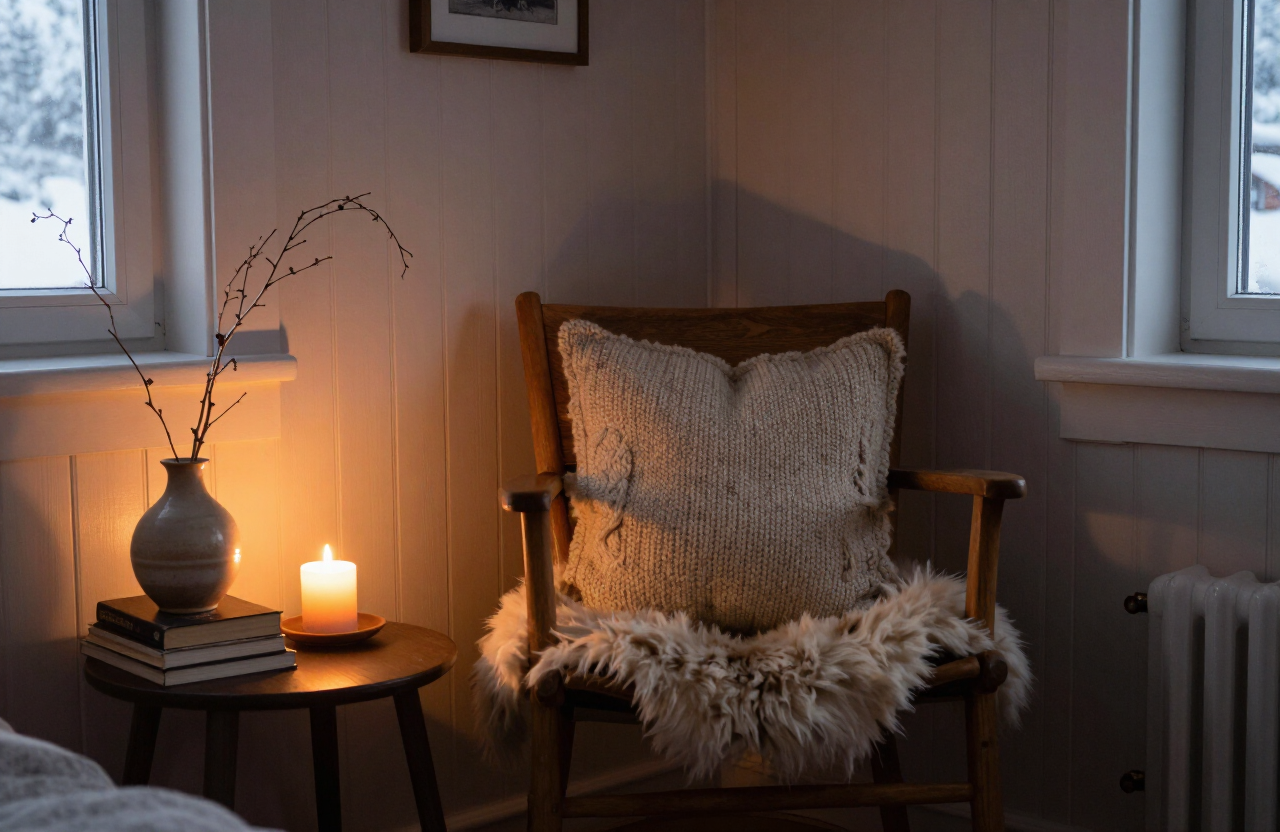
Scandinavian interiors are easy to recognize online: white walls, pale wood, clean furniture and very little clutter.
But real homes in Norway are rarely that perfect or that uniform.
What makes a home feel Scandinavian is not one specific sofa, color or decoration. It is the way the space works with light, weather, seasons and everyday life.
Living in Norway, I notice that comfort is usually more important than making a home look like a showroom.
This is one perspective on everyday interiors in Norway, where homes vary with personal taste, budget, location and the age of the building.
It is not just minimalism
Scandinavian style gets confused with extreme minimalism a lot. The image is of a nearly empty room, a single chair, a bare wall and nothing out of place. That look exists in magazines and showrooms, but it represents only one version of Scandinavian interiors.
Real homes here tend to be practical first. Furniture is chosen because it works for everyday life, not because it makes a statement. A room can have a simple layout and practical storage without being nearly empty.
Personal items are still visible. A child’s drawing on the fridge, a stack of books that is actually being read, a worn armchair that nobody wants to replace because it is comfortable. These everyday details can make a room feel comfortable without looking like a catalog.
A Norwegian home can be simple without feeling empty.
Light matters more than people expect
Seasonal daylight is part of the setting for Norwegian interiors. Summer brings long days, while winter offers much shorter daylight hours. How dramatic that difference feels depends on where in Norway you live.
Large windows can make daylight a central feature of a room, particularly in contemporary homes. Older buildings vary widely in window size and layout. Light curtains or curtains pulled back during the day can help a space make the most of the daylight available.
When the daylight fades, lamps take over. Many homes use several small lamps rather than one bright ceiling light, and the bulbs are often warm rather than cool. Candles can add a soft glow to a dinner table, while LED candles offer another way to create a similar effect. The overall effect is softer and lower than the bright, even lighting you see in a lot of online interior photos.
In winter, lighting is not only decoration. It changes how a room feels during long dark evenings.
Of course, not every home lights itself the same way. A city apartment and an older farmhouse approach this differently, and personal taste plays a big part. But the instinct to warm a room with light when the outside goes dark is widespread.
Wood adds warmth — and it is not always pale
Wood is the material people associate most with Scandinavian interiors, and it appears in many Norwegian interiors, from floors and furniture to wall paneling and window frames. What surprises people is that it is not always the pale birch or whitewashed oak the style is known for.
Pine paneling is one familiar example, particularly in older interiors and traditional cabins, and its color can deepen with age. Oak shows up in floors and tables. Painted wood is everywhere too — doors, baseboards, kitchen cabinets and older furniture painted in muted tones. A lot of homes also keep older wooden furniture that has been handed down or bought secondhand, which brings a different color and texture than something new.
Cabin interiors go further, often using darker or more rustic wood across whole walls. And in some city homes you will find darker wood furniture or stained floors chosen deliberately to add depth.
The reason wood matters so much is simple. Natural materials help a space feel warmer and less clinical. A room with wood floors, wooden furniture and textiles does not feel like a blank box — it feels like somewhere people actually live.
Warmth comes from texture
If wood gives a Norwegian home its structure, texture gives it its warmth. And a lot of that warmth comes from textiles rather than from anything expensive or decorative.
- Wool blankets, folded over the arm of a sofa or the foot of a bed.
- Rugs, often layered over wood floors to soften the sound and the feel underfoot.
- Cushions in linen, wool or cotton, mixed rather than matched.
- Curtains that soften the light and add texture around windows.
- Sheepskins, thrown over a chair or bench.
- Knitted textiles, often handmade, that carry a personal story.
None of this has to be coordinated. In fact, the rooms that feel most natural are usually the ones where textures have accumulated over time rather than being bought as a set. A room can have very simple furniture and still feel warm because of the materials around it.
Color is quieter, not absent
The stereotype is that Scandinavian interiors are white and beige, full stop. That is part of the picture, but it is not the whole of it. Muted palettes are one familiar approach, but Norwegian homes can also include bold walls, patterned textiles and colorful furniture.
For a muted palette, options include soft green, gray-blue, warm brown, deep red, and earthy tones that sit somewhere between clay and moss. These are not loud colors. They sit quietly against wood and white walls, but they give a room character.
Color often appears in textiles — a wool blanket, a rug, a set of cushions. It shows up on painted walls or a single piece of furniture, like a green kitchen cabinet or a deep red door. The effect is usually calm, but it is not colorless.
The home changes with the seasons
This is one of the things I find most interesting about living here. Small seasonal changes can give the same room a different feeling throughout the year.
In summer, lighter textiles and garden flowers can give the room a fresher feel. Windows may be opened, and flowers from the garden or the roadside can sit in a jar on the table.
In winter, blankets, lamps and richer textures can make winter evenings feel cozier. Wool blankets may return to the sofa, and branches, dried flowers or simple natural decorations can replace the bright summer flowers.
The room itself may not change much, but the atmosphere does.
I think this seasonal instinct is a bigger part of Scandinavian style than any particular color or chair. The home is set up to feel different in January than it does in July, and that is the point.
Traditional and modern Norwegian cabin interiors
A Norwegian cabin, or hytte, does not have just one look. Traditional cabins may feature timber paneling, a wood stove and furniture collected over many years. That combination can create a relaxed interior where an inherited chair sits comfortably beside a newer sofa.
Contemporary cabins can be very different, with large windows, open layouts and fully equipped kitchens. Some combine clean lines with wood and warm textiles; others take a more rustic approach.
Cabin style depends on the building, its setting and how the owners use it. The useful lesson is the mix of comfort, practical choices and a connection to the surroundings, rather than a rule that cabins must be dark, simple or old-fashioned.
Practicality is part of the style
It is easy to talk about Scandinavian style as if it were only a visual look. But a lot of the choices in Norwegian homes come straight from the weather and from everyday routines.
Entryways are a good example. A place for wet shoes, boots and coats is useful when rain, mud or snow come home with you. In a compact apartment, that may mean a shoe tray and wall hooks; a larger house may have a separate entrance or utility area.
- Entryways with room for wet shoes, boots and coats.
- Storage that handles outdoor gear as well as everyday clutter.
- Durable materials that can cope with salt, mud and snow.
- Easy-to-clean surfaces in kitchens, entrances and bathrooms.
- Places to dry clothing, towels and outdoor gear.
This is the part of Scandinavian style that gets lost online. The clean, calm look is partly a result of homes being set up to deal with real weather and real life efficiently. When everything has a place, the room feels calmer — but the place exists because it is needed, not because it looks good in a photo.
Cozy without too much decoration
Norwegian homes can feel cozy without being filled with decorative objects. The coziness usually comes from the things that are already doing a job: the lamps, the textiles, the wood, the light.
A few personal objects are often enough. Plants, books, ceramics, family photos — these are the things that make a room feel like someone lives there. You do not need a wall of art or shelves of ornaments.
Decorative objects have a place too. Art, ornaments and collections can bring personality to a room; a restrained interior is one choice, not a rule for Norwegian homes.
What people often get wrong
A few misunderstandings come up again and again when people talk about Scandinavian style from the outside.
- Scandinavian style is not always white. Wood, muted color and texture matter as much as pale walls.
- Homes are not always perfectly tidy. Real rooms have books, shoes and everyday mess.
- Minimal does not mean cold. A simple room can be warm, soft and inviting.
- Old and new furniture can be mixed, and often is. An inherited chair next to a modern sofa is completely normal.
- Expensive designer furniture is not necessary. Ordinary, practical pieces do the job well.
The most convincing Scandinavian interiors usually look lived in.
How to bring some of this style into your own home
You do not need to live in Norway, or to buy anything specific, to borrow from this approach. A few practical habits matter more than any particular product.
- Review your lighting before replacing furniture. Combine warm ambient lamps with brighter task lighting where you read, cook or work.
- Use natural materials where you can — wood, wool, linen, ceramics.
- Remove unnecessary clutter gradually rather than all at once. Keep what you use and what you care about.
- Choose fewer objects that you actually like, rather than filling gaps with things that mean nothing to you.
- Add warm textiles — a wool blanket, a rug, a few cushions — to soften hard surfaces.
- Use wood where it makes sense, even in small ways like a shelf, a tray or a side table.
None of this is about following rules. It is about making your home easier to live in and calmer to spend time in, which is really the whole idea.
A home that works for everyday life
Scandinavian style is often reduced to a look, but in Norway it is also about how a home feels during everyday life.
Light, warmth, practical furniture and natural materials matter because they make the space easier and more comfortable to live in.
For me, the appeal is a home that feels comfortable, useful and lived in.
A personal perspective on interiors and everyday life in Norway. Homes and preferences vary across the country. Last reviewed: September 2026.