Cost of Living in Norway in 2026: Rent, Cars, Food, Electricity and a Realistic Family Budget
Food & Prices · 18 min read
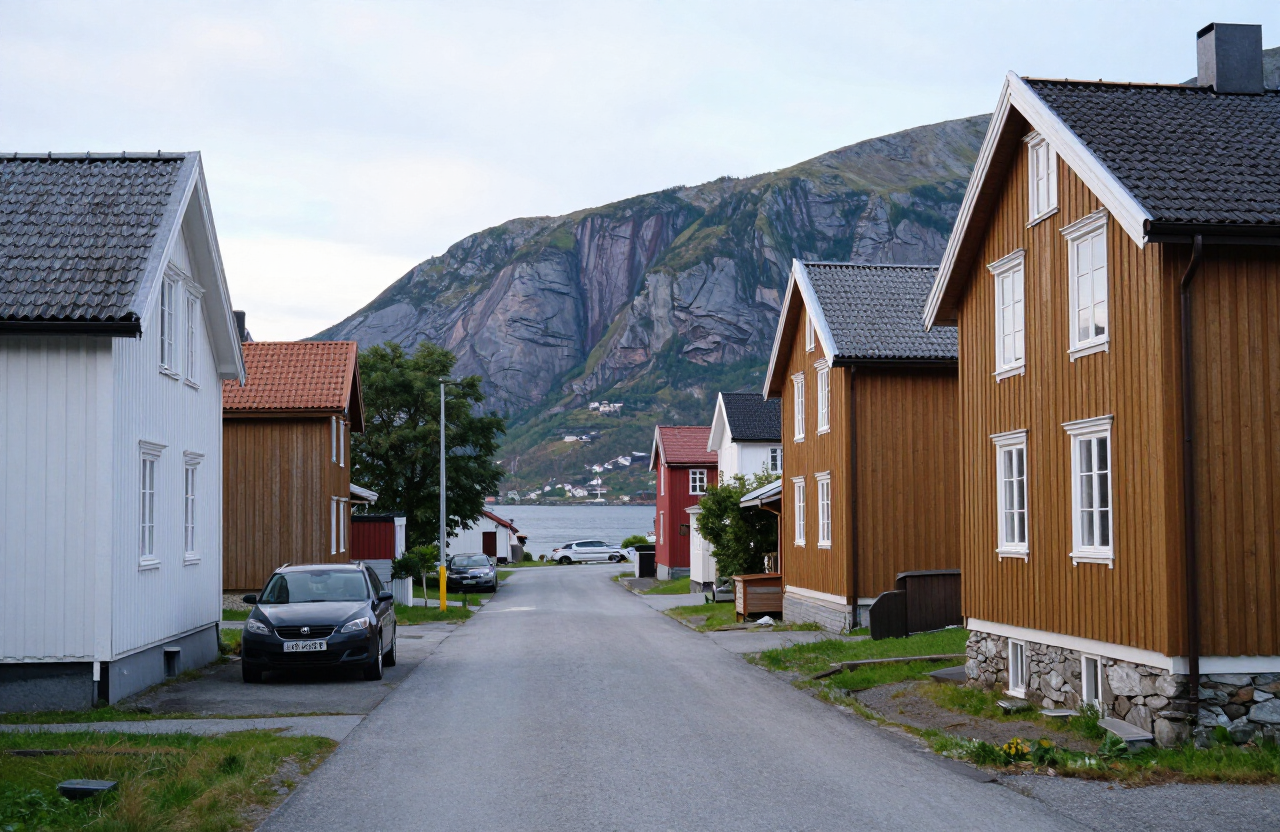
Let me tell you what living here actually feels like. People often hear that Norwegian salaries are high, and that is true in a general sense. But high salaries do not automatically mean life feels cheap. After rent, electricity, food, a car and the dozen small expenses that come with running a household, the picture looks different from the one you see in a salary headline.
The real question is not whether Norway is expensive in general. It is where you live, whether you rent or own, whether you need a car, how large your household is, how much you drive, how much electricity you use, and whether you are in Oslo or a smaller community. This guide walks through the cost of living in Norway in 2026 the way I would explain it to a friend who was thinking about moving here — with the real numbers where we have them, and honest observations about daily life where the numbers alone do not tell the whole story.
Rent: Oslo versus smaller towns
The gap between rent in Oslo and rent in smaller places is large enough to change a household’s whole financial situation. The latest annual official rental survey from Statistics Norway (SSB) covers 2025, and it is the most recent official rent data currently available — labeled that way so 2025 figures are not mistaken for freshly measured 2026 numbers. For a 3-room dwelling, the survey shows these average monthly rents:
In the SSB rental statistics, the number of rooms includes bedrooms and living rooms but excludes the kitchen, bathroom and storage rooms. A Norwegian “3-room dwelling” therefore commonly means a living room and two bedrooms, rather than three bedrooms.
- Oslo and Bærum: NOK 19,030 per month
- Urban settlements with 2,000–19,999 inhabitants: NOK 10,170 per month
- Urban settlements with 200–1,999 inhabitants and sparsely populated areas: NOK 8,610 per month
A 3-room dwelling in the Oslo and Bærum area averages roughly NOK 19,030 a month, while a comparable dwelling in a smaller urban settlement averages around NOK 10,170, and in the smallest settlements and sparsely populated areas around NOK 8,610. That is NOK 8,860 a month between Oslo and a mid-sized town (NOK 19,030 minus NOK 10,170), before you have bought a single grocery. Over a year, that is NOK 106,320. These are averages, not a price list: actual rent varies by location, building quality, availability, housing type, whether the place is furnished, and how close it is to transport or the center. A nice apartment in a popular Oslo neighborhood can sit well above the Oslo average, and a tired unit in a less sought-after area can sit below it. The NOK 8,610 figure is an average across small settlements and sparsely populated areas, where the rental market is often thin — there may be very few rentals available at all, which is a different problem from price. Still, the direction of the difference is real and large, and it is one of the biggest reasons life outside Oslo can feel completely different financially.
Buying or renting outside the cities
Housing can be much more affordable in smaller communities, and that applies to buying as well as renting. A house that would be out of reach in Oslo can be realistic in a smaller town, and you often get more space for the money.
The trade-offs are availability and distance. In smaller places there may be very few homes on the market at any time, so you are choosing from a smaller pool and patience matters. Remote living can also increase your dependence on a car — and a car in Norway is not a small expense, as I will get to. You may save thousands on housing and then spend a good part of what you saved on fuel, tolls, ferries and repairs. It is not a bad choice, just one with a cost attached that people sometimes forget to count.
Electricity: the bill that can change with the season
Electricity is the bill that catches newcomers off guard. In much of Norway, electricity is used for heating, and a cold, dark winter means consumption can climb fast just when you least want it to.
According to Statistics Norway, the average household total price for electricity — energy, grid rent and taxes combined — in the second quarter of 2026 was about 173.2 øre/kWh before government electricity support was deducted. After the support was applied, the average came down to about 117.9 øre/kWh. That 117.9 øre/kWh figure is a national weighted average reflecting households under both the ordinary electricity-support scheme and the voluntary Norgespris scheme, so it does not mean every Norwegian household paid exactly that rate. The support makes a real difference to the bill, but it does not make electricity cheap.
Your actual cost depends on region, season, consumption, contract type, home size and how you heat it. A large house heated mainly with electricity through a cold winter will cost noticeably more than a small apartment in a milder coastal area, and a cold month can change the bill more than any price-per-kWh headline. Electricity is a major household expense in Norway, and the winter is what shapes it most.
Water and municipal fees
Norway does not have one national household water bill. What you pay for water and municipal services depends on your municipality, whether the home is connected to municipal water and sewer, whether you rent or own, and whether those costs are rolled into your rent.
In a Norwegian tenancy, the landlord generally cannot add separate municipal charges such as property tax, waste collection or similar municipal fees on top of the agreed rent. Electricity can be charged separately when this has been agreed, and water and sewer charges can only be charged separately when this has been agreed and when the cost is based on measured consumption. Homeowners, by contrast, can face a range of municipal charges: water, sewer, waste collection and other property-related fees, which vary from municipality to municipality.
Because it varies so much, there is no single national monthly average to quote. If you rent, check which permitted utilities are billed separately. If you buy, check the municipality’s current charges before building your monthly budget.
Home internet
Broadband in Norway is generally reliable, but it can be more expensive than many newcomers expect. As one provider’s published list prices, Telenor’s September 2026 examples included 150 Mbps for NOK 1,048 per month, 500 Mbps for NOK 1,148 per month, and 1,000 Mbps for NOK 1,398 per month. These are one provider’s dated list prices, not national averages. Provider prices, promotions, bundles, technology and address availability can all affect what a customer actually pays, and the right plan depends on the speed you need and whether internet is bundled with TV.
In a rural area the options can look different — fiber, fixed wireless, mobile broadband, or in more isolated spots satellite internet — and the speed and price outside the towns are not always the same as a provider’s main advertising. Check what is actually available at a specific address before assuming the headline plan applies.
Insurance: the monthly cost people forget to add up
Insurance is one of those monthly expenses that adds up quietly. Depending on your situation the list can include car insurance, home contents insurance (innboforsikring), house or building insurance if you own a detached home or are otherwise responsible for the building coverage, travel insurance, life insurance, and disability or income-protection insurance. Not every household needs all of these.
Motor liability insurance for registered vehicles is legally required in Norway. Life, travel and home contents insurance are not automatically mandatory just because you live here. Coverage and prices vary enormously depending on your age, the property and car being insured, your coverage level, deductible, claims history, household situation and the insurance company you choose, so two households with the same number of policies can receive very different quotes.
The Norwegian Consumer Council recommends prioritizing insurance against losses that would be financially difficult to absorb yourself, while checking that you are not paying twice for overlapping coverage. One important point when comparing with the SIFO reference budget below: that budget already includes home contents insurance within its household media and leisure category and car insurance within the car operating costs, so those should not be added again on top of the NOK 33,456 figure. Additional personal policies such as life or income-protection cover vary by household.
A realistic family reference budget
For household consumption, I use the SIFO Reference Budget from OsloMet as the main reference. The SIFO Reference Budget is not an average of what Norwegian families actually spend. It is a reference budget for a reasonable standard of living — what it would cost to maintain a decent everyday life, not what people necessarily pay.
In one illustrative calculation using the 2026 SIFO Reference Budget, a household consisting of two adults, one 15-year-old daughter and one small gasoline car has estimated monthly reference-budget expenses of approximately NOK 33,456. That figure needs context about what it does and does not include.
- It does NOT include housing.
- It does NOT include electricity.
- It does NOT include other housing-related costs.
- It does NOT include vacations.
- It does NOT include alcohol and tobacco.
- It does NOT include expensive leisure activities.
The SIFO budget covers many categories beyond groceries — clothing, shoes, personal care, transport-related everyday costs and other ordinary consumption — so NOK 33,456 must not be presented as a food budget. It is a broad reference budget for ordinary consumption, and groceries are only one part of it. One detail about the transport part: the SIFO car component covers operating costs such as fuel, insurance and annual taxes, assumes a small car driven 10,000 km per year for households of 1–4 people, includes road tolls, and assumes public transport is used for commuting. Depreciation and loan costs are not included, so a car-dependent rural household may have different transport costs from this reference example.
What groceries actually cost you
For groceries specifically, there is no single universal number. The real amount depends on the ages of the people in your household, your cooking habits, your food preferences, whether you shop at discount chains or premium supermarkets, and how often you eat out.
Norway has a clear spread of supermarket chains, from discount stores like REMA 1000, KIWI and Coop Extra to fuller-range stores like MENY. Shopping at discount chains and cooking at home are practical ways to keep food costs under control, while eating out regularly can increase a household’s monthly spending quickly. The SIFO figure tells you what a reasonable standard of living costs across ordinary consumption; your own grocery receipt tells you what your habits cost.
Gasoline: one of the costs you notice immediately
If you drive, fuel is one of the first Norwegian prices you feel, and it is worth treating carefully because fuel prices fluctuate significantly by day and by station. A price you saw last week may not be the price today.
As a current example, registered daily averages reported by DrivstoffAppen on September 15, 2026 showed around NOK 26.48 per liter for 95-octane gasoline and around NOK 27.86 per liter for diesel. These are registered daily averages from DrivstoffAppen, not official government fuel prices — they change frequently and can be higher or lower depending on the day, station and region.
This matters more in rural Norway, where the distances are longer, public transport options are fewer, and the trip to work, school or the shops is more likely to be a drive. In some regions you also add frequent ferry costs or tolls on top of fuel, which is part of why a car is such a decisive expense.
New cars: much more than the purchase price
A car is not just what you pay for it at the dealership. The real cost of owning a car in Norway is the sum of everything that follows, and it can be a lot more than the sticker suggests.
According to OFV’s 2026 vehicle ownership-cost report, a new car priced at around NOK 550,000 and driven 20,000 kilometers per year is estimated to cost approximately NOK 162,326 per year for an electric car and NOK 183,609 per year for a gasoline car. Those estimates include depreciation, interest, insurance, motor-insurance tax, tires, service and maintenance, and electricity or fuel — what the car actually costs to keep, not just to buy. Converted into approximate calculated monthly equivalents, that is around NOK 13,500 a month for the electric car and around NOK 15,300 a month for the gasoline car.
OFV notes that tolls and ferry costs are not included in that example. In a country where many routes involve tolls and ferries, that is not a small omission — if your daily life sends you across ferries or through toll stations, the real cost of your car climbs further.
Used cars: cheaper to buy does not always mean cheaper to own
A used car costs less to buy, and that lower price can feel like a clear win. But in Norway, labor and workshop costs can make repairs on an older car feel extremely expensive, and one bad bill can change the whole calculation. The purchase price is lower, and the biggest depreciation — the steep drop in value a new car suffers in its first years — may already have happened by the time you buy it.
The risks sit on the other side. An older car can bring unexpected repairs — brakes, suspension, timing components, electronics, rust or battery problems, plus whatever the periodic inspection turns up — and workshop labor in Norway is not cheap. NAF, the Norwegian Automobile Federation, points out that buying a 2–3-year-old car can reduce depreciation because much of the initial value loss has already happened, and that a pre-purchase inspection can reveal hidden issues before you commit. Paying for a proper pre-purchase inspection can save you from a much larger repair bill later.
The balanced version: a cheap used car can make sense, but one major repair bill can erase a large part of what you saved. Plan for repairs, not just for the purchase price, and you will be much closer to the real cost.
Living remotely: cheaper housing, but not necessarily cheap living
Remote living is where the cost-of-living picture gets most personal. Smaller and more remote places can offer much cheaper housing, more space and a calmer lifestyle, and for a lot of people that is genuinely worth it. Rural Norway is a beautiful and livable part of the country.
Beyond the car dependence already mentioned, the trade-offs show up in other quiet ways. There are often fewer stores nearby, which can mean planning shopping around longer trips rather than popping out for one thing. There is less competition between service providers, which can affect what you pay for everything from internet to repairs. Travel to airports or larger towns takes time and fuel, and when something needs fixing — a car, a household appliance, a professional service — you may have to drive farther to get it done. Count the car, the fuel and the distances as part of the cost of the cheaper house, not as separate surprises.
So how much does a family of three need?
There is no such thing as “the amount every Norwegian family needs.” What I can do is build a realistic illustrative comparison from official reference figures, and be clear about what it is and is not.
Let’s take a family of two adults, one teenager, and one car. We start with the illustrative SIFO reference-budget calculation of NOK 33,456 per month for ordinary consumption — which excludes housing, electricity, vacations, alcohol and tobacco, and expensive leisure — and then add housing, because SIFO does not.
Oslo / Bærum example
Using the latest official average 3-room rent for Oslo and Bærum of NOK 19,030 per month, the combination looks like this:
- SIFO reference consumption: NOK 33,456/month
- Rent (Oslo and Bærum average): NOK 19,030/month
- Electricity: variable, not included in SIFO
- Other housing-specific costs: variable
Added together, the SIFO reference consumption and the Oslo-area rent already come to more than NOK 52,000 per month — and that is before electricity and certain other housing-specific costs. This is an illustrative combination of official reference figures for a specific household type in a specific place, not an actual household average or a universal requirement.
Smaller-town example
Using the latest official average 3-room rent for urban settlements with 2,000–19,999 inhabitants of NOK 10,170 per month, the same household looks different:
- SIFO reference consumption: NOK 33,456/month
- Rent (smaller-town average): NOK 10,170/month
- Electricity: variable, not included in SIFO
That comes to around NOK 43,600 per month before electricity and certain housing-specific costs. For a sparsely populated area, the latest average 3-room rent of NOK 8,610 per month is another reference point, which would lower the combined figure further. These are illustrative combinations of official reference figures, not actual household averages — but they show how much the location of your home shifts the whole budget.
What people underestimate most
The costs that surprise people most after they move here are the ones that are easy to overlook when you are focused on salary and rent: total car ownership (insurance, tires, service, depreciation and the repair that arrives at the worst moment); repairs in particular, which can feel disproportionately expensive because of labor costs; winter electricity use; frequent small grocery purchases; insurance across the car, the home and travel; tolls and ferries on your regular routes; and home maintenance if you own, since things age especially in a wet, cold climate. Planning for these before you move can make the transition much easier.
Is Norway impossibly expensive?
No, not impossibly — but it is expensive, and where you live changes the equation enormously. The same salary can feel comfortable in a smaller town and tight in central Oslo, and that is mostly about housing. Salaries in Norway are higher than in many countries, which is part of why the high prices are manageable for people working here, and everyday habits help: used goods are common and accepted, people shop strategically, discount supermarkets matter a lot, and cooking at home makes a meaningful difference compared with eating out regularly. Living outside Oslo can reduce the housing pressure substantially, which is the single biggest lever most households have.
Whether those costs feel manageable depends heavily on household income, housing costs, debt, family size and where you live, and where and how you live shift it more than almost anything else. Some things cost far more than people expect — cars, repairs, winter electricity, the weekly grocery shop — and some things become much easier outside the biggest cities, especially housing. Two people on the same salary can have very different financial lives.
So take these figures as reference points, not as a verdict. Check the current numbers with the official sources before you make decisions, plan for the costs people tend to forget, and give yourself a realistic picture of what a month here actually looks like. That is the version of Norway I want you to have — not the postcard, and not the warning, but the real thing.
Prices vary by region, household, season and lifestyle, and figures in this article are reference points, not personal financial advice. Rent figures are from the latest available official SSB rental survey (2025); electricity figures are from Statistics Norway for Q2 2026; consumption figures are from the SIFO/OsloMet Reference Budget for 2026; car ownership estimates are from OFV for 2026; fuel prices are registered daily averages from DrivstoffAppen for September 15, 2026. Always verify current figures with the official sources before making decisions. Last reviewed: September 2026.