Fishing in Norway: 13 Mistakes Visitors Should Avoid
Fishing in Norway · 10 min read
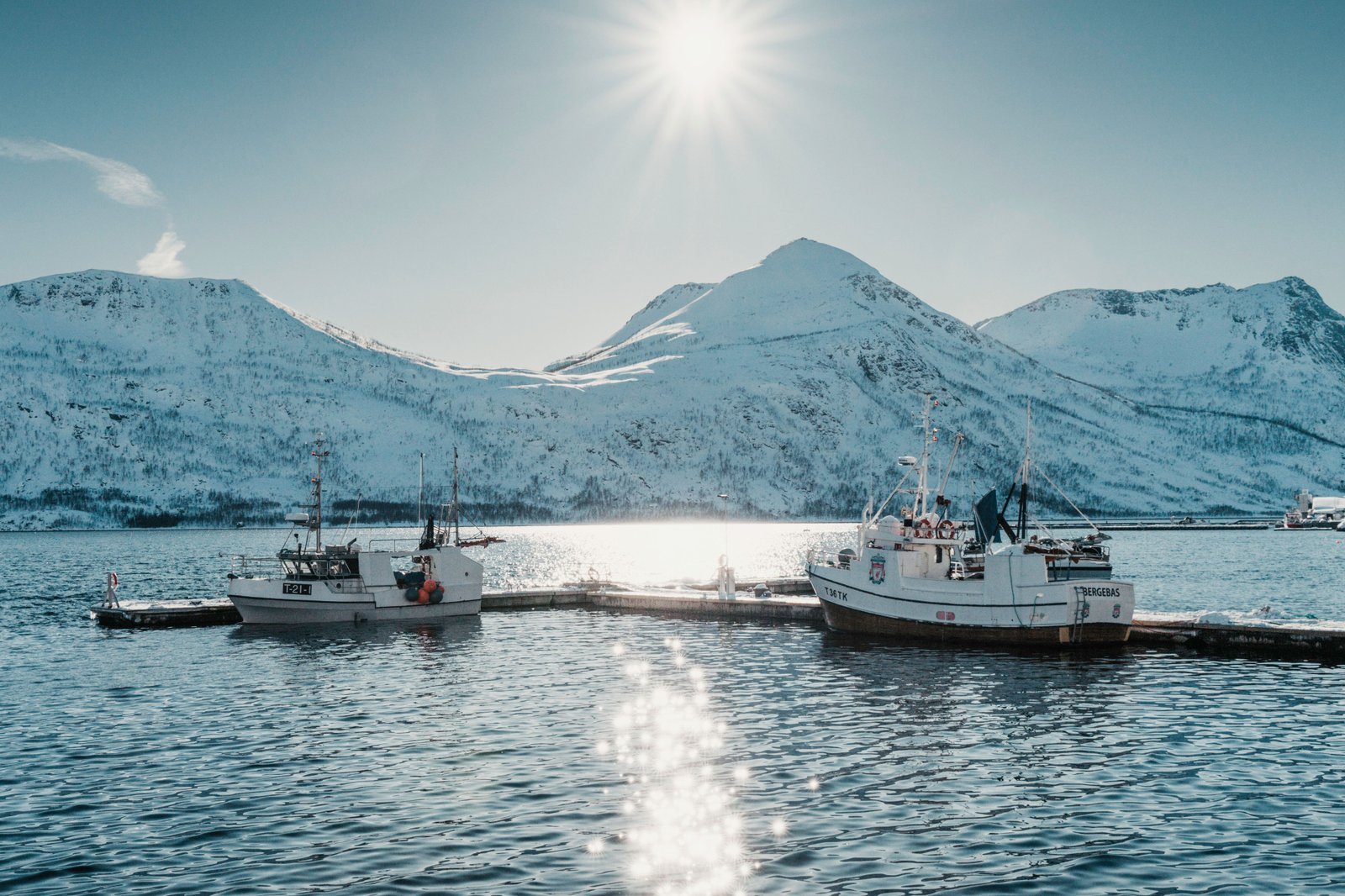
A fishing trip in Norway can involve very different rules depending on whether you fish at sea, in a lake or in a salmon river. Before you cast, it helps to know which permits you need, what equipment you may use and whether you can take your catch home.
These 13 mistakes cover practical issues visitors should check when planning a trip, from export paperwork to boat safety and preventing the spread of fish diseases. Use this overview alongside the current official rules for your exact location and season.
Mistake 1: Assuming sea fishing is completely rule-free
Recreational sea fishing is one of the most accessible ways for foreign visitors to fish in Norway. From a boat or the shore, tourists can fish for many ordinary sea species under broad access, and that openness is part of what makes the Norwegian coast so attractive to anglers.
But "accessible" is not the same as "rule-free." Minimum sizes, protected species, gear restrictions, area closures and other rules still apply, and they can vary by region and season.
For ordinary tourist sea fishing, foreign visitors are limited to handheld tackle such as rods and handlines. Nets, pots, traps and longlines are not permitted under these tourist-fishing rules. Do not assume that equipment you use legally at home is allowed in Norway.
Foreign tourists are not permitted to sell their catch.
Mistake 2: Assuming you can take all your catch home
A second common misunderstanding is that anything you catch can travel home with you. In reality, separate export rules apply to taking fish out of Norway, and they are tied to how and where you fished.
These quota rules concern the tourist export quota for recreationally caught sea fish, not a universal rule covering all fish. In 2026, eligible tourists age 12 and older may export up to 15 kg of fish or fish products per permitted export, and the quota may be used twice per calendar year. Fishing must take place through a registered tourist fishing business. Individual documentation is required, and the named person must be present. From January 1, 2027, the quota becomes 10 kg, twice per calendar year. The full breakdown is in our separate guide, Taking Fish Home from Norway: 2026 Export Rules for Tourists.
These quota rules do not apply to salmon, trout, char or other freshwater species. That exemption does not remove applicable fishing rules or the destination country’s import requirements. No additional trophy fish may be exported on top of the sea-fish quota.
See the Norwegian Directorate of Fisheries — Export quota for the official details.
Mistake 3: Fishing freshwater without checking the local permit
Freshwater fishing does not work the same way as ordinary sea fishing, and this is where many visitors get caught out. In most lakes and rivers, you need permission or a local fishing license from whoever holds the fishing rights to that specific water.
There is no single general license that automatically covers every freshwater location in Norway. The fishing rights may belong to a landowner, a local fishing association or another local rights holder, and the permit you need is the one that covers the exact lake or river you intend to fish. A rule that applies to one water may not apply to the next one a few kilometers away.
For a fuller explanation of when you need a permit, where to buy one, how the rules for children work, and how national regulations, local rules and permit conditions work together, see Freshwater Fishing in Norway: Licenses, Local Rules and What Visitors Need to Know.
Mistake 4: Treating salmon rivers like ordinary freshwater
Waters with runs of Atlantic salmon, sea trout or sea-run Arctic char have additional fishing regulations. Sea-run Arctic char are migratory; not all Arctic char populations migrate to the sea.
Anglers age 18 and older who target these anadromous fish in rivers and lakes normally need to pay the national fishing fee as well as obtain the local permit. These are separate requirements. Migratory-fish regulations can also affect fishing for other species in the same waters, so check the precise rules for the stretch and season.
For the full breakdown of permits, the national fishing fee, permitted gear, seasons and conservation rules, see Salmon Fishing in Norway: Rules for Salmon, Sea Trout and Arctic Char.
Mistake 5: Ignoring minimum sizes and protected species
Check which species you may target and retain before fishing. At sea, national rules include minimum sizes and species protections, with additional regional and seasonal restrictions. In freshwater, check the applicable regulations and permit conditions for the exact water.
Carry a suitable measuring tool and learn to identify the species you are likely to catch. Do not deliberately target protected species. If you catch an undersized, protected or unfamiliar fish, follow the applicable species-specific handling and release instructions rather than assuming that one rule covers every situation.
Mistake 6: Fishing too close to aquaculture facilities
Along the Norwegian coast you will see aquaculture facilities — fish farms — and the rules around them are specific and worth knowing before you fish near one.
When fishing, keep more than 100 meters from the nearest fish farm. Boat traffic must keep at least 20 meters from fish farms and their mooring equipment. These are mandatory distances.
Fish farms can be large and not always obvious from every angle, so when you are fishing near one, give it clear space on all sides. If you are unsure whether a structure counts as an aquaculture facility, the safe choice is to move further away rather than to push the boundary.
Mistake 7: Assuming calm weather on land means calm conditions at sea
A calm, pleasant day in a coastal village does not guarantee calm conditions on the water. Conditions around headlands, islands and exposed coastal areas can be very different from conditions on shore, and wind against tide can build up a short, uncomfortable sea quickly.
This is why it is worth checking a marine forecast for the actual area and hours you plan to be on the water, not just the general weather for the nearest town. A forecast that looks fine for walking around a harbor may tell a different story for a small boat a few hundred meters offshore.
For practical guidance on life jackets, marine forecasts, fuel, cold water and what to check before leaving the dock, see Boat Fishing Safety in Norway: Rules and Tips for Visitors.
Mistake 8: Going too far offshore in an unfamiliar rental boat
Renting a boat opens up a lot of good fishing, but it does not automatically make every area safe to reach. Your experience level matters as much as the boat does, and exposed waters, strong wind and unfamiliar coastlines demand more skill than a sheltered sound.
Take the time to understand the boat before you leave the dock — how to start and stop the engine, how to steer, where the safety equipment is kept, and how to contact the rental operator if something goes wrong. Follow the advice of the rental operator or fishing camp about where to go and where to avoid, and ask questions rather than guessing.
Agree on a suitable route, fuel reserve and turnaround point with the rental operator. Stay within the boat’s operating limits and your own ability, wear suitable flotation equipment and check any license requirements before taking control. Shorten or cancel the trip if conditions exceed those limits. For an emergency at sea, call 112 or use VHF channel 16.
Mistake 9: Relying on old information
Fishing rules, export quotas, protected species, local permits and seasonal restrictions can all change, and they sometimes change during a season. Information that was correct a few years ago — or even last year — may have been updated since.
Old forum posts, social media threads and memories from a previous trip are useful for general context, but they are not a reliable source for the rules that apply today. A river that opened on a certain date last year may open later this year, and an export quota that was one number recently may be a different number now.
The habit that avoids this mistake is simple: check current official sources shortly before your trip, and again close to the day you plan to fish. A few minutes of checking beats discovering halfway through the day that the rules have changed.
Mistake 10: Assuming rules are the same everywhere in Norway
Norway is a long country, and its fishing rules are not uniform. Local rules can differ between rivers, lakes and coastal areas, and a regulation that applies in one place may not apply in another a short distance away.
This is why it is worth checking the exact location where you plan to fish, rather than treating "fishing in Norway" as one set of rules. Identify the specific lake, river or stretch of coast, find the local permit and rules that apply there, and fish according to what is current for that place.
Check each new fishing area before you arrive, and allow time to arrange any permits or clarify restrictions.
Mistake 11: Moving between waters without preparing your equipment
Boots, waders, landing nets and other equipment can carry diseases and invasive organisms between waters, even when they look clean. This also matters when traveling with equipment previously used abroad.
The Norwegian Food Safety Authority requires equipment to be dried or disinfected before moving it between freshwater systems. Additional rules apply in disease restriction zones, where drying alone may not be sufficient. Follow the authority’s methods and the requirements for both the water you are leaving and the water you plan to fish.
Clean equipment before treatment, allow enough time for complete drying where that method is permitted, and check any local disinfection or documentation requirements before arrival. Do not rely on finding a sign at the water’s edge.
Mistake 12: Moving live fish or using live fish as bait
Do not move or release live fish into another lake or river, and do not use live fish as bait. Moving fish or water between freshwater systems can spread diseases and invasive species.
Do not use fish from one freshwater system as bait in another. Empty water containers only in the water system the water came from, and follow the applicable catch-handling and release rules where you fish.
Mistake 13: Planning the trip only around catching fish
Even with the right permits, the right gear and a good location, fishing is never guaranteed. Weather, tides, local conditions and fish activity are all unpredictable, and a trip planned entirely around a specific catch can turn into a disappointment for reasons that have nothing to do with skill.
A better approach is to be flexible. Treat the fishing as the main thread of the trip, but leave room for the things that make a Norwegian fishing trip good even when the fish are quiet — the landscape, the long evenings, a walk along the shore, a meal in a coastal village.
Have alternative plans for days when the weather prevents fishing, and be ready to change plans if the weather or the fish tell you to. No particular catch is guaranteed.
A simple checklist before you fish
A short list to run through before you fish in Norway:
- check the exact local rules
- check permitted fishing gear
- check minimum sizes and protected species
- buy the correct freshwater permit where required
- pay the national fishing fee where applicable
- check export rules before taking fish home
- stay clear of aquaculture facilities
- check the weather and marine forecast
- understand the boat before leaving
- follow equipment drying and disinfection requirements before moving between waters
- do not move live fish
- never sell tourist-caught fish
Arrange permits, equipment preparation and any export documentation in advance. Recheck conditions and restrictions shortly before fishing.
Before you cast
Start with the exact water you plan to fish, then check the permits, gear and catch rules that apply there. Prepare your equipment, plan for the weather and sort out export requirements before you expect to take fish home. The linked guides explain each topic in more detail.
Fishing regulations, export quotas, protected species, local permits and seasonal restrictions can change. Always check the current rules with the Norwegian Directorate of Fisheries, the Norwegian Environment Agency and the local fishing-rights holder for the exact water and season before fishing. Last reviewed: September 2026.
Keep reading
- Fishing Around Tustna and Aure
- Fishing in Norway for German Visitors
- Taking Fish Home from Norway: 2026 Export Rules for Tourists
- Freshwater Fishing in Norway: Licenses, Local Rules and What Visitors Need to Know
- Salmon Fishing in Norway: Rules for Salmon, Sea Trout and Arctic Char
- Boat Fishing Safety in Norway: Rules and Tips for Visitors