Offshore Jobs in Norway: Salaries, Rotations and What You Need to Work at Sea
Working in Norway · 14 min read
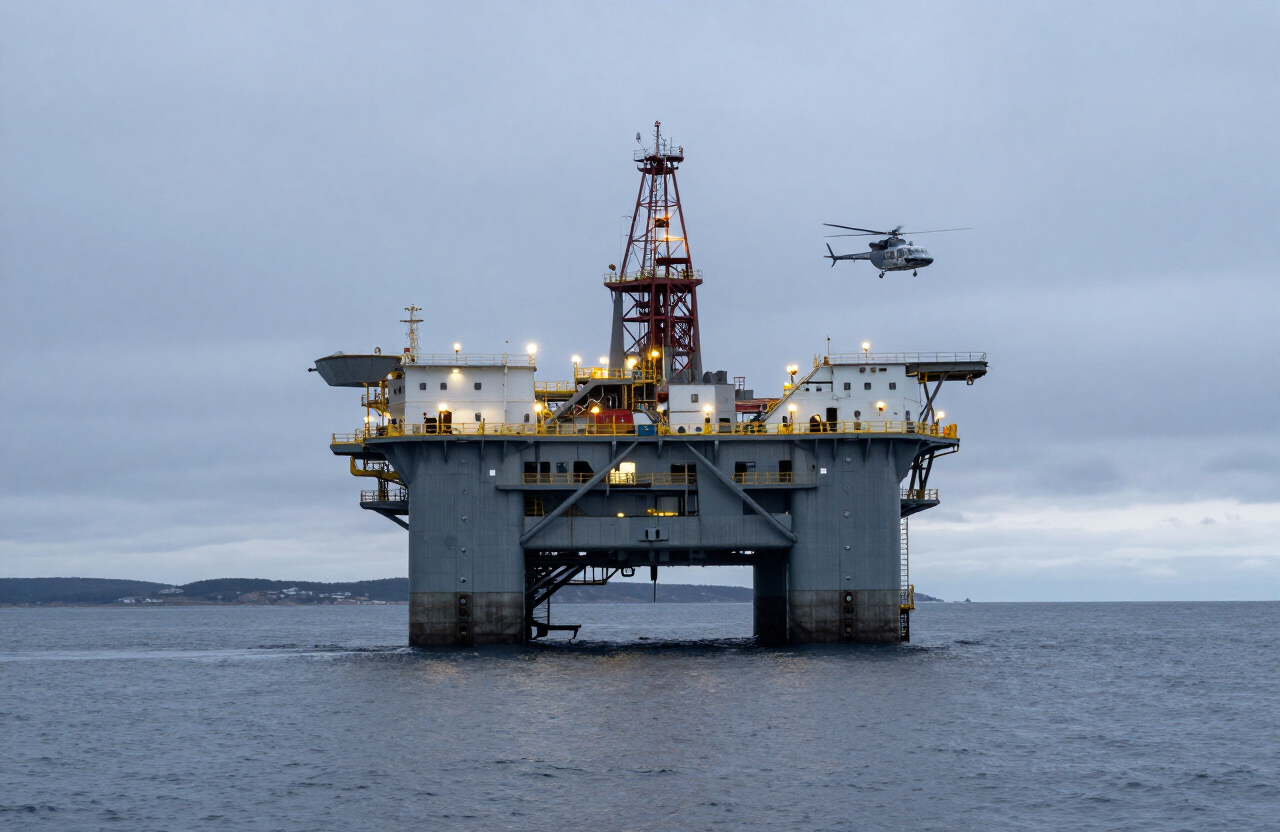
Offshore work in Norway attracts a lot of attention for one obvious reason: many specialized roles can be very well paid.
But the salary is only part of the story.
Working offshore can mean long shifts, strict safety requirements, helicopter transport, time away from home and a work schedule that looks very different from an ordinary Monday-to-Friday job.
For engineers, technicians and skilled workers, the Norwegian offshore sector can be interesting — but it is not usually a sector where someone simply arrives with no qualifications and gets a high-paying job.
This guide focuses mainly on petroleum work on fixed and mobile installations on the Norwegian Continental Shelf. Offshore service vessels, maritime employment and offshore wind can be subject to different rules.
What does “offshore work” mean in Norway?
When people talk about offshore jobs in Norway, they are usually thinking of the oil and gas industry on the Norwegian Continental Shelf. But the term covers a wider range of workplaces than many realize, and the jobs on each of them can be very different.
Offshore work can include work on:
- oil and gas installations
- drilling rigs
- production platforms
- offshore service vessels
- subsea operations
- maintenance and technical support
Different jobs have very different requirements. A process engineer on a production platform, an electrician carrying out maintenance, and a subsea specialist working on intervention equipment may all be described as “offshore workers,” but the qualifications, certifications and day-to-day work are not the same. Reading a job advertisement carefully matters more than relying on the label. The rules for offshore installations are not automatically the same as the rules for vessel crews, so the workplace type matters as much as the job title.
Who works offshore?
A modern offshore installation is a small, self-contained workplace, and it needs a broad mix of people to keep running safely. Some roles are highly technical, others are practical trades, and some keep the installation itself functioning as a place to live and work.
Examples of offshore roles include:
- mechanical engineers
- electrical engineers
- process engineers
- petroleum engineers
- automation technicians
- electricians
- mechanics
- welders
- instrument technicians
- drilling personnel
- subsea specialists
- HSE personnel
- logistics
- catering and support roles
None of these should be read as easy to obtain. Many technical and engineering roles require specific education, recognized qualifications and relevant experience, and competition for positions can be strong. Catering and support roles exist, but they are a small part of the workforce and are often run by specialist contractors.
Engineers and technical professionals
For readers with an engineering or technical background, this is the section that matters most. Offshore companies may recruit people with backgrounds in:
- mechanical engineering
- electrical engineering
- automation
- process engineering
- subsea technology
- petroleum engineering
- maintenance
- project engineering
Qualifications, relevant experience and sometimes Norwegian recognition of education may matter depending on the role. Employers may ask foreign-trained engineers to document their education and professional qualifications. Formal recognition or specific authorization may also be required for certain regulated professions or specialized roles, so check the requirements for the individual position. None of this means an offer is guaranteed — it means the employer is checking whether your background fits a specific, demanding job.
How much do offshore workers earn?
This is one of the questions people ask most often, and it is the one where honest, cautious answers matter most. Offshore salaries can be high, especially for skilled and experienced workers, but earnings vary greatly depending on:
- occupation
- qualifications
- experience
- employer
- collective agreement
- offshore allowances
- shift patterns
- overtime
- responsibility
Some offshore compensation packages can reach high annual levels, but this does not mean every offshore worker earns the same. A trainee, a newly qualified technician and an experienced engineer are not paid identically, and a role on a drilling rig is not priced the same as a comparable role on a production platform. The only reliable figure is the one in the actual vacancy, the applicable collective agreement and the official or employer information for that specific job. There is no single salary that represents every offshore role. Treat claims that everyone earns a fortune offshore with caution. Current collective agreements and salary tables can be consulted on the official Offshore Norge — Agreements and salary tables page.
Why can the pay be higher?
When offshore pay is higher than comparable onshore work, there are usually practical reasons behind it rather than a mystery. Some of the factors that can push offshore compensation up include:
- specialized qualifications
- responsibility
- shift work
- offshore allowances
- long working days during offshore periods
- safety requirements
- time away from home
In other words, the pay reflects the demands of the job as much as the skills involved. Long shifts, time away from family and strict safety routines are part of what is being compensated. That is worth keeping in mind when comparing an offshore salary with an ordinary onshore one.
How offshore rotations work
Offshore workers often work in rotation rather than a normal weekly schedule. Instead of commuting home every evening, you spend a defined period on the installation and then a defined period at home. It is one of the defining features of offshore life, and it changes how you plan everything from childcare to vacations.
A common pattern in parts of the Norwegian offshore industry is around two weeks offshore followed by several weeks off, but schedules vary considerably by employer, role, installation and collective agreement. Some collective agreements use a 14-days-on / 28-days-off rotation, while other arrangements exist depending on the job and agreement. For workers subject to the Norwegian rules on offshore petroleum activities, the offshore period normally cannot exceed 14 days, although regulated exceptions exist. Other rotation patterns can exist, and the length of both the offshore period and the rest period can differ from what you might expect.
Ordinary working hours for workers covered by the offshore petroleum rules cannot exceed 12 hours per day and must respect a maximum average of 36 hours per week, calculated over a period of up to one year. The exact schedule still varies by employer, role and collective agreement, so always check the specific rotation in the vacancy or employment contract.
The important thing is not to assume that one rotation applies to every offshore job. Always check the exact schedule in the vacancy or employment contract before you plan your life around it.
What is life like during an offshore rotation?
Life offshore is structured, and that structure is part of how a remote installation stays safe and productive. A typical offshore period involves long working days, often around twelve hours, with shift work that can include nights. You sleep on the installation, meals are provided, and the daily routine follows strict procedures for everything from starting a task to moving between areas.
Safety procedures are not a formality — they shape how every task is done. There are briefings, permits, checks and drills, and everyone is expected to follow them without shortcuts. Privacy is limited because you are living and working in the same place with the same group of people, and being away from family for extended periods is part of the rhythm. Weather can also affect transport, which means helicopter flights and crew changes can be delayed.
For some people, the long periods of free time between rotations are a major advantage. For others, being away from home for extended periods is the hardest part of the job.
How do workers get to the platform?
Helicopter transport is commonly used for personnel traveling to many fixed offshore oil and gas installations on the Norwegian Continental Shelf, and for a lot of offshore workers the working day effectively begins at the heliport, not on the installation. The safety procedures around helicopter transport are strict — briefings, check-in routines and safety equipment are all part of the process. Other offshore workplaces may use different transport arrangements.
Offshore safety training
This is an area where I want to be factually careful, because getting it wrong can cost people money and time. Personnel staying on fixed or mobile installations on the Norwegian Continental Shelf generally need valid basic safety and emergency preparedness training.
The core requirement is the Norwegian basic safety course, commonly known as GSK, which includes helicopter underwater escape training, usually referred to as HUET. GSK refresher training is generally required every four years. Equivalent training recognized under the North Sea agreement may be accepted in place of GSK, but requirements can change, and the exact course content and validity period should be confirmed with the relevant industry body.
Maritime professionals certified under the STCW convention follow their own training requirements and normally renew their training every five years. Offshore service vessel crews follow maritime rules rather than the petroleum installation rules, although HUET is still needed when transport to or from the vessel takes place by helicopter.
Please verify which course and certification your specific employer requires before you book anything. Confirm the exact training with the employer and with Offshore Norge before paying for any course, and do not pay for courses before confirming that the qualification is appropriate for the role you are applying for. Some employers arrange or fund required training as part of onboarding, but this varies by employer and position.
Offshore medical requirements
Workers on fixed or mobile petroleum installations generally need a valid offshore medical certificate, normally issued by an approved petroleum doctor. The medical examination is about confirming that someone is fit for the offshore environment, the work involved and the emergency preparedness duties that come with it.
Certain recognized British and Dutch medical certificates may also be accepted. The County Governor of Rogaland is the authority responsible for offshore medical certificates, approved doctors and exemptions, so questions about certificates, approved doctors or exceptions should be directed there.
Vessel crew members may be subject to different maritime medical requirements rather than the petroleum installation requirements. Check the current medical requirements with the employer and official Norwegian sources before paying for examinations or courses. I have not listed the detailed medical criteria here because they are regulated separately and should be checked with an approved petroleum doctor or the relevant authority.
Do you need Norwegian?
Language requirements vary, and this is another question where a single answer does not fit every job. English may be the working language in some technical and international environments, particularly where crews are mixed or where documentation and procedures are written in English. But Norwegian can be required or strongly preferred in other roles, especially where communication with local authorities, contractors or onshore teams is part of the work.
Safety communication is particularly important offshore. In an emergency, clear and fast communication matters, and employers take this seriously when deciding whether a candidate is suitable. My advice is to read each vacancy carefully — if Norwegian is listed as a requirement, treat it as a real one, and if the role is advertised as English-speaking, confirm that in the job description rather than assuming.
Can foreigners work offshore in Norway?
Yes, foreign workers can work offshore in Norway, but the immigration rules can differ depending on citizenship, the type of installation and the employment arrangement.
Nordic citizens follow their own Nordic rules. EU/EEA citizens can begin working without a residence permit, but they must register if they are going to live and work in Norway for more than three months. People from outside the EU/EEA normally need the correct permit before they start working.
UDI also has specific rules for certain offshore workers. For example, some people working on qualifying mobile installations on the Norwegian Continental Shelf may work without a residence permit if UDI’s specific conditions are met. The installation must not be in a fixed production phase or tied to a fixed platform for that exemption to apply. Under this exception, the employer must notify the police before the worker enters, the worker must present themselves to the police no later than one week after entering the Schengen area and before starting work, and the worker must also meet the applicable entry, re-entry and Schengen stay requirements. Confirm those requirements directly with UDI before planning travel.
Maritime workers and vessel crews may be subject to different immigration rules. Check your individual situation with UDI and, where necessary, the Norwegian police before accepting a job or traveling to Norway for work.
Where to find offshore jobs
The same job-search channels that work for the rest of the Norwegian labor market work for offshore roles, but you have to search them the right way. The main places to look are:
- company career pages
- NAV / Arbeidsplassen
- FINN.no jobs
- established recruitment companies
- engineering and offshore service companies
One practical tip: search for actual job titles, not only “offshore jobs.” A generic search will flood you with recruitment-agency pages and clickbait. Searching for specific roles gives you real vacancies and a clearer sense of what employers actually need. Useful examples include:
Search for real job titles
Searching by job title is the fastest way to separate genuine offshore engineering jobs in Norway from marketing pages. Try terms such as:
- offshore mechanical engineer
- offshore electrician
- process engineer
- automation technician
- subsea engineer
- drilling engineer
- maintenance technician
Vacancies change frequently, so check current listings directly on employer websites and established job platforms. The point is to show the kind of search that actually returns real, specific roles rather than generic “work in Norway” pages. When you find a vacancy, read the requirements section before anything else — it tells you whether the role is realistic for your background.
What employers usually look for
Requirements vary, but most offshore vacancies touch on a recognizable set of expectations. Employers commonly look for:
- relevant education
- trade certificates where required
- offshore experience
- technical experience
- safety training where required
- medical fitness where required
- reliability
- language ability
- ability to work shifts and rotations
I am keeping this deliberately cautious because requirements genuinely vary by role and employer. An entry-level maintenance technician and a senior subsea engineer are not being assessed against the same checklist. Use the vacancy to understand the employer’s requirements, and also check the official legal, professional and safety requirements that apply to the role.
Is offshore work easy to get?
No. Offshore jobs can attract many applicants, and many positions require specific education, trade qualifications, experience or certifications. High pay does not mean easy entry — in fact, the roles that pay the most are often the ones with the steepest requirements.
Some online content makes offshore work in Norway sound like an easy shortcut for foreign applicants. It is not. The sector rewards people who already have the right background, or who are willing to build it over time through education, trade certification and relevant onshore experience first.
Should you pay for offshore courses before you have a job?
This is one of the most common questions, and the honest answer is: not automatically. People should not assume that buying several expensive courses will guarantee employment. Offshore training is necessary, but paying for it on speculation is a risk, especially when the course may not be the one a specific employer actually requires.
Before spending money on offshore training, check whether the course is actually required for the jobs you are targeting and whether the employer expects candidates to already hold it. Some employers may arrange or pay for the basic safety training as part of onboarding, so buying it yourself in advance can be unnecessary.
When you do need to verify a training provider, check approved providers through Offshore Norge. That is the industry body that maintains the current standards for basic safety training on the Norwegian Continental Shelf, and it is a more reliable reference than a random course advertised on social media.
Avoid offshore job scams
Because offshore salaries attract attention, the sector also attracts scams aimed at international applicants. Be cautious, and treat any of the following as a warning sign:
- guaranteed offshore jobs for a fee
- fake recruiters
- requests for large upfront payments
- fake safety-course packages
- employers that cannot be verified
- unclear job offers
No legitimate recruiter can guarantee you a high-paying offshore job simply because you paid them. A real employer or recruitment agency will be verifiable, will provide clear written information about the role, and will not ask you to pay for the promise of work. If an offer feels rushed, vague or too good to be true, it usually is.
What I would check before applying
Before you apply for an offshore role, it helps to run through a practical checklist. Each item tells you something about whether the job is realistic for you and what you are actually agreeing to:
- exact job title
- required education
- required experience
- language requirements
- right to work in Norway
- required safety training
- required medical certificate
- rotation schedule
- offshore location
- salary structure
- offshore allowances
- collective agreement if applicable
- travel arrangements
- whether training is paid by the employer or employee
If a vacancy does not answer most of these, that itself is useful information. A serious offshore employer usually provides clear detail on the role, the rotation and the requirements, because they expect candidates to make an informed decision about living and working offshore.
Who may enjoy offshore work?
Offshore work tends to suit people who are comfortable with structure. The installation runs on routines, and the people who do well are usually the ones who can work within them rather than against them.
Offshore work may suit people who:
- are comfortable with structured routines
- can spend extended periods away from home
- work well in teams
- take safety seriously
- like technical environments
- value longer periods of time off between rotations
The rotation pattern is a big part of the appeal. For some people, having a long stretch of days off after an offshore period is a genuine lifestyle advantage that an ordinary weekly job cannot match.
Who may find it difficult?
The same features that suit some people make offshore work difficult for others. It is worth being honest about this before committing, because the lifestyle is not for everyone.
Offshore work may be difficult for:
- people who dislike being away from family
- people uncomfortable with helicopters or offshore environments
- people who need a conventional daily routine
- people who dislike shift work
None of this is a judgment — it is just a reminder that the rotation, the transport and the environment are part of the job, not optional extras. Thinking about these factors honestly is one of the most useful things you can do before applying.
Final thought
Offshore work in Norway can offer strong career opportunities for people with the right qualifications, experience and mindset.
The pay can be attractive, but the job comes with demanding working periods, strict safety requirements and time away from home.
For engineers and skilled technical workers, the best place to start is not by buying courses or chasing promises of high salaries. Start by identifying the roles that match your background, reading real job advertisements and understanding exactly what qualifications those employers require.
Employment requirements, offshore safety rules, training requirements and immigration rules can change. Always verify current information with the relevant employer and official Norwegian sources. Last reviewed: September 2026.
Keep reading
- Working in Norway: How to Find a Job, Salaries and What Foreigners Need to Know
- Seasonal Jobs in Norway: Summer Work, Winter Jobs and Opportunities for Foreigners
- Working in Remote Norway: What Life and Work Are Really Like Outside the Cities
- Jobs in Norway Without Speaking Norwegian: Where to Look and What to Expect
- Salaries in Norway: Average Pay, Taxes and What You Really Take Home