Norway with Kids in Winter: Where to Go and What to Plan
Winter in Norway · 9 min read
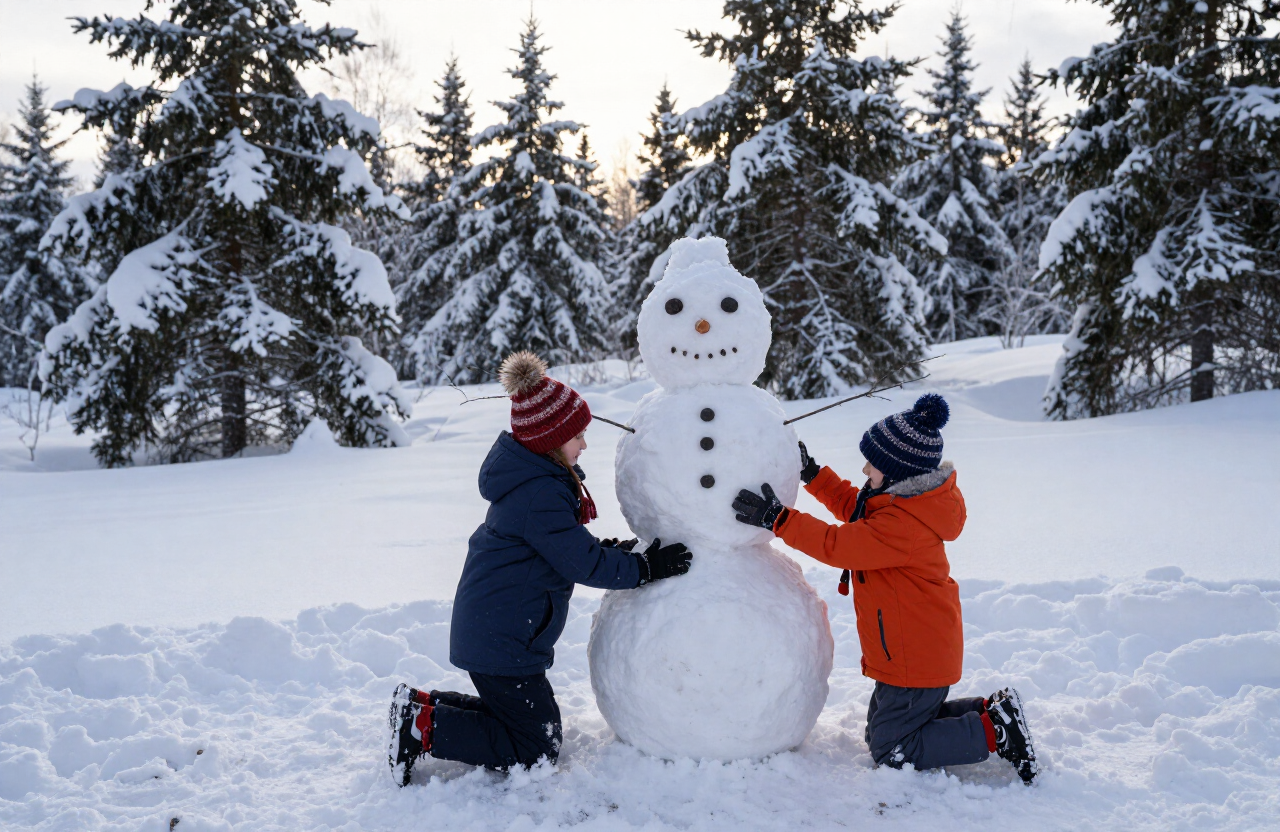
Norway can be a genuinely good winter destination for families, as long as the plan matches the children, the weather and the time of year. You do not have to ski to enjoy it, and some of the best days are the simplest ones — snow, warm drinks and a slow pace.
This guide compares a few realistic bases, looks at what there is to do beyond skiing, and covers clothing, daily rhythm and transport. The aim is to help you choose one or two places that suit your family rather than trying to fit too much in.
Is Norway a good winter destination for families?
Yes — Norway can work very well for families in winter, provided the plan is realistic. Good clothing, regular breaks and activities that fit the children’s ages matter more than a packed itinerary, and there is plenty to enjoy without ever putting on skis.
It helps to be honest about the limits. Winter weather is variable, distances between places are long, costs add up, and the hours of daylight are fewer than many visitors expect. None of that is a reason to stay home, but it is a reason to plan around it rather than against it.
Norway is a long country, and conditions change a lot by region and month. Oslo still has daylight in December, but the days are short and darkness arrives early; far above the Arctic Circle, the sun does not rise at all for a period in midwinter. Short days are not the same as the polar night, and not all of Norway goes dark in winter. Checking daylight and weather for the exact place and dates — the forecasts on Yr are reliable — is part of planning a manageable trip.
December, January and the late winter offer quite different experiences. Daylight increases as the winter progresses, while snow, temperatures and activities depend on the destination and the conditions at the time. No single month is universally best for every family, and snow is never guaranteed — check the conditions for your exact destination and dates rather than counting on a particular month.
Where to go in Norway with kids in winter
Choosing one or two bases usually works better than trying to visit several. Travel between these places is not always quick or simple — Tromsø is a long way from Oslo, and mountain crossings can be affected by weather — so it is worth building a trip around a base rather than treating the map as a checklist.
Four places families often consider:
Oslo
Type of trip
City break
Activities beyond skiing
Museums, ice skating, pools, cafés
Main point with children
Lots of indoor options if the weather turns; daylight is short but present
Lillehammer
Type of trip
Town and nearby winter resorts
Activities beyond skiing
Open-air museum, indoor pools, town walks
Main point with children
Compact and family-oriented; check winter opening hours and transport to nearby activities
Geilo
Type of trip
Mountain resort
Activities beyond skiing
Sledding, short snowshoe walks, snow play
Main point with children
Purpose-built for winter; confirm indoor options and their access conditions
Tromsø
Type of trip
Northern experience
Activities beyond skiing
Northern lights tours, Polar Museum, Polaria, Science Centre, fjord cruises
Main point with children
Plan around limited daylight; check tour age limits and keep indoor alternatives
Oslo gives you a city with real indoor alternatives — museums, science centres and pools — which helps when the weather changes. Visit Oslo’s winter pages list activities and family events; it is worth checking opening times and booking ahead for popular museums during school holidays.
Lillehammer is a compact town with a family-friendly feel, with several winter resorts in the surrounding area. The Maihaugen open-air museum welcomes visitors year-round, though opening hours vary and some historical houses and activities may not be available in winter — check what is open before you go. The nearby ski schools are used to teaching children, but they are not in the town centre, so plan transport to them.
Geilo is a mountain resort built around winter, and a good base for families who want snow play, short guided walks and a children’s ski school. Rather than assuming indoor options, confirm what is actually available — such as pools — and check their opening hours and whether access is public or tied to a specific accommodation. The official Geilo winter pages list current activities and facilities.
Tromsø is the option for families drawn to the north — the northern lights, the Polar Museum and fjord cruises. The northern lights excursions run at night and need more planning with children, since waiting in the cold is not for every child and the lights are never guaranteed. But Tromsø is not only a night-time destination: the city has daytime activities and indoor alternatives such as Polaria and the Science Centre of Northern Norway, which are worth checking on their official pages. Daylight and conditions also change a lot across the winter months, so Tromsø is not equally dark for the whole season. Visit Tromsø’s family page is a useful starting point, and it also notes that you should only go onto frozen lakes when you are completely sure the ice is safe.
Things to do beyond skiing
Beyond skiing, there is plenty that is simply about being in the snow. Building snowmen, short sledding runs in safe spots, and ice skating on maintained rinks are all easy wins. Many towns have indoor pools, museums and science centres, and a short walk followed by a hot drink in a café can be a simple, enjoyable part of the day.
Do not walk or skate on frozen lakes unless local authorities have confirmed the ice is safe. Conditions change, and what was safe last week may not be safe today.
Guided activities — dog sledding, reindeer visits, evening northern-lights excursions — can be wonderful, but they often come with age limits, set durations and weather conditions. There is no universal minimum age; each operator sets its own rules, so check before booking rather than assuming a tour suits your child.
The northern lights are the obvious draw in the north, and they are worth trying for — but treat them as a possibility, not the reason the whole trip has to succeed. Waiting for them means standing in the cold, often late in the evening, and they may not appear at all. For what those evenings involve, our guide to the northern lights in Norway covers timing, clothing and expectations. A trip can be completely worthwhile without them.
Plan differently for toddlers, younger children and teenagers
Different ages need different plans. With toddlers, the priorities are short outings, reliable food, rest and easy access to a warm room. A single short activity and a long lunch may be the whole day, and that is fine.
For school-age children, one main activity a day plus unstructured time usually works better than filling every hour. Leave room for the snow play that happens between the planned things.
Teenagers travel best when they have a say. Involving them in the choices — and picking at least one activity that matches their interests — tends to go further than a schedule imposed on them.
Age is only a rough guide, though. A child’s interest, experience and individual needs matter more than the number on their birth certificate, and cold tolerance varies from one child to another. Watch the child in front of you, not the itinerary.
What children should wear in Norway in winter
Clothing suited to the conditions is an important part of a manageable winter trip with children. The system is layers, and each layer has a job.
The base layer, next to the skin, moves moisture away. The insulation layer — fleece, wool or a padded jacket — holds warmth. The outer layer blocks wind and keeps moisture out. For active snow play, a jacket and trousers that shed snow and damp matter more than sheer thickness.
Then the details: warm boots with grip, wool socks, a hat, something for the neck, and gloves or mittens (mittens are warmer for small hands). Always carry dry spares — gloves and socks get wet fast, and a dry pair changes the whole afternoon.
What children wear to walk through a city is not the same as what they need to play in the snow for an hour. A single jacket does not solve the whole outfit, and layering lets you adjust as they warm up or cool down.
This article contains affiliate links. If you buy through them, we may earn a commission at no extra cost to you. As an Amazon Associate I earn from qualifying purchases.
For the smaller items, a children’s winter hat, neck warmer and gloves set is one option to look at. The listing is aimed at roughly ages 3–9, so check the sizing and materials against your child. It is an everyday accessory set, not technical or waterproof gear, and it will not cover every condition on its own.
For an outer layer, a fleece-lined children’s winter jacket is one option worth considering. Whether it suits your child depends on its specifications, the layers worn underneath and the conditions you expect — check the size, the listed materials and whether it is described as water-resistant or waterproof. Water-resistant is not the same as waterproof, and a single jacket is one part of the layering system rather than a complete solution for a winter trip.
For the wider question of what to bring, our guide to what to pack for Norway goes into more detail on layers, fabrics and packing for changeable weather.
Build warm-up breaks into the day
Plan the day around warm-up breaks rather than pushing through. A café, a museum lobby, a pool or simply the hotel room give children a chance to warm up, eat and reset before going back out.
One calm pattern that works well: an outdoor activity during the daylight hours, lunch somewhere warm, and an indoor option for the afternoon when energy and temperature drop. It is not a rule, just a shape that keeps the day manageable.
There is no universal safe length of time to be outdoors in winter — it depends on the weather, the wind, the activity and the child. The useful habit is to adjust the plan to the conditions and to how the children actually feel, not to a fixed schedule.
Transport and accommodation choices that make life easier
Where you stay shapes the day. Staying close to the main activities cuts cold walks and transit time, which matters with children. Look for somewhere with space to dry gloves and boots overnight, and a kitchen or affordable meals nearby if you want to keep food costs down.
Check transport access and connections for your chosen dates before booking — not every base is easy to reach without a car, and schedules, weekend services, holidays and local connections vary. Think about luggage and child equipment too: a car seat, a sled or a buggy for snow all take up space.
Some bases are reachable by public transport. Geilo sits on the Oslo–Bergen railway, and you can check train times to Geilo on Vy, but the connection between the station, your accommodation and activities still needs planning. In Tromsø, city buses cover much of the town, and some northern-lights and fjord tours include transport — check what is included with the operator. A northern itinerary does not automatically mean you need to rent a car; see Visit Tromsø — getting around for current options.
A car is not always necessary, and in Oslo it can be more of a burden than a help. In mountain and northern areas, a car gives flexibility but also responsibility. If you do plan to drive, be honest about your experience with winter conditions, and check current road information with the Norwegian Public Roads Administration before setting out. Some mountain roads close in winter, and conditions can change quickly.
For the budget side — accommodation, transport and food — our Norway travel budget guide walks through realistic example ranges for different travel styles.
Common mistakes to avoid
A short list of the things that tend to trip families up:
- Planning too many activities in a single day.
- Assuming there will be snow everywhere — conditions vary by region and month.
- Treating all destinations as close to each other when distances are long.
- Booking activities without checking age limits, durations and weather conditions.
- Forgetting dry spare clothes, especially gloves and socks.
- Leaving indoor backup plans to decide on the spot, when options may require booking or have limited hours.
Short FAQ
Can you enjoy Norway in winter without skiing? Yes. Snow play, museums, pools, skating on maintained rinks and short walks are all there for families who never touch skis. Skiing is one option, not the price of entry.
Is Tromsø suitable for a winter trip with children? It can be, with preparation. Northern lights excursions run at night and need more planning with children, but the city also has daytime and indoor options, and daylight varies across the winter. It suits families who are prepared for the conditions and treat the northern lights as a possibility rather than a guarantee.
Is snow guaranteed in Norway in winter? No. Snow cover varies by region, altitude and month, and in some years the coast or lowland cities have little snow. Check conditions for your exact destination and dates before counting on it.
Do families need to rent a car? Not always. Oslo has good public transport, Geilo is reachable by train on the Oslo–Bergen line, and Tromsø has city buses plus tours that may include transport. In mountain and northern areas a car adds flexibility, but only if you are comfortable driving in winter conditions.
What should children wear for winter activities? A layering system: a moisture-moving base layer, an insulation layer, a wind- and moisture-resistant outer layer, warm boots with grip, wool socks, a hat, neck protection and gloves or mittens — plus dry spares.
A trip that fits your family
A winter trip to Norway with children works best when the plan fits the family in front of you — one or two well-chosen bases, clothing that handles the conditions, and room to rest and change the plan. The snow and the light are worth the effort, but the days that go well are usually the simple, slow ones rather than the ones packed full.
Winter conditions, opening times, transport services and activity age limits can change by region and season. Always check current information with official sources before travelling. Last reviewed: October 2026.